Tuesday, 31 January 2012

Piblokto


Piblokto is a word that English has taken from the Polar Eskimo language of northern Greenland. It is defined in the OED thuslyly:

Piblokto A condition affecting the Inuit peoples in winter, characterized by an episode of wild excitement and irrational behaviour followed by a period of stupor or unconsciousness, sometimes with apparent seizures.

That's a very useful word for me, as it describes most of my weekends, without giving too much away. As in: "Saturday night? I'm afraid I was utterly piblokto. But anyway, how was your weekend?"

The Inky Fool waited patiently for the art school dance to end.

P.S. One reason for my piblokto was that The Etymologicon has managed a second week at number one in the Sunday Times bestseller list for hardback non-fiction. This makes me a trifle guilty as I'm keeping Dare To Dream, the exclusive story of the winners of X-Factor (with pictures) from their rightful spot at the top.

Monday, 30 January 2012

How John Donne Invented the Hedge Fund


I've always, for some whimsical reason, liked to imagine hedge funds as rustic financial institutions based at the edge of fields. Etymologically I am, of course, right. And it's all down to the poet John Donne.

Once upon a time there were hedges. Bushy things at the end of your garden and the like. Then came the verb to hedge, which meant to enclose within a hedge. So you could, for example, hedge in your garden.

Then, in the early seventeenth century John Donne promised a chap called Sir Henry Goodere that he would send him a letter in verse. He didn't get round to it, and to make matters worse Goodere wrote him one, which meant that Donne really owed him. Or, as Donne put it in an apologetic letter:

I owed you a Letter in verse before by mine own promise, and now that you think that you have hedged in that debt by a greater by your Letter in verse, I think it now most seasonable and fashionable for me to break.

That's the first recorded usage of the phrase hedge in meaning to secure a bad debt by making it part of a larger one for which better security has been obtained. Although this was the first common financial use of hedging.


From that sense of making your debts safe, came the idea of hedging in your bets by betting on more than one horse which pops up in 1672. From there you get the idea of finding two near-identical things at different prices, buying the cheaper and shorting the dearer. And thus the hedge fund.

None of which has anything to do with the old slang term of hedge-whore, which denoted a kind of wandering prostitute, not attached to any brothel, who therefore bestowed her favours "on the wayside, under a hedge".


Someday, I'm going to write a poem in a letter.

Friday, 27 January 2012

Cundum


Oh, the things you find in old dictionaries! This from Grose's Dictionary of the Vulgar Tongue (1811):

Cundum. The dried gut of a sheep, worn by men in the act of coition to prevent venereal infection; said to have been invented by one colonel Cundum. These machines were long prepared and sold by a matron of the name of Philips, at the Green Canister, in Half-moon Street, in the Strand. That good lady having acquired a fortune, retired from business; but learning that the town was not well served by her successors, she, out of a patriotic zeal for the public welfare, returned to her occupation; of which she gave notice by divers hand-bills, in circulation in the year 1776. Also a false scabbard over a sword, and the oil-skin case for holding the colours of a regiment.

The OED doubts the good colonel's existence, but to make up for that it provides the following lovely couplet from a poem of 1744:

Let not the Joy she proffers be Essay'd,
Without the well-try'd Cundum's friendly Aid.

Either way, it has nothing to do with the town in France.

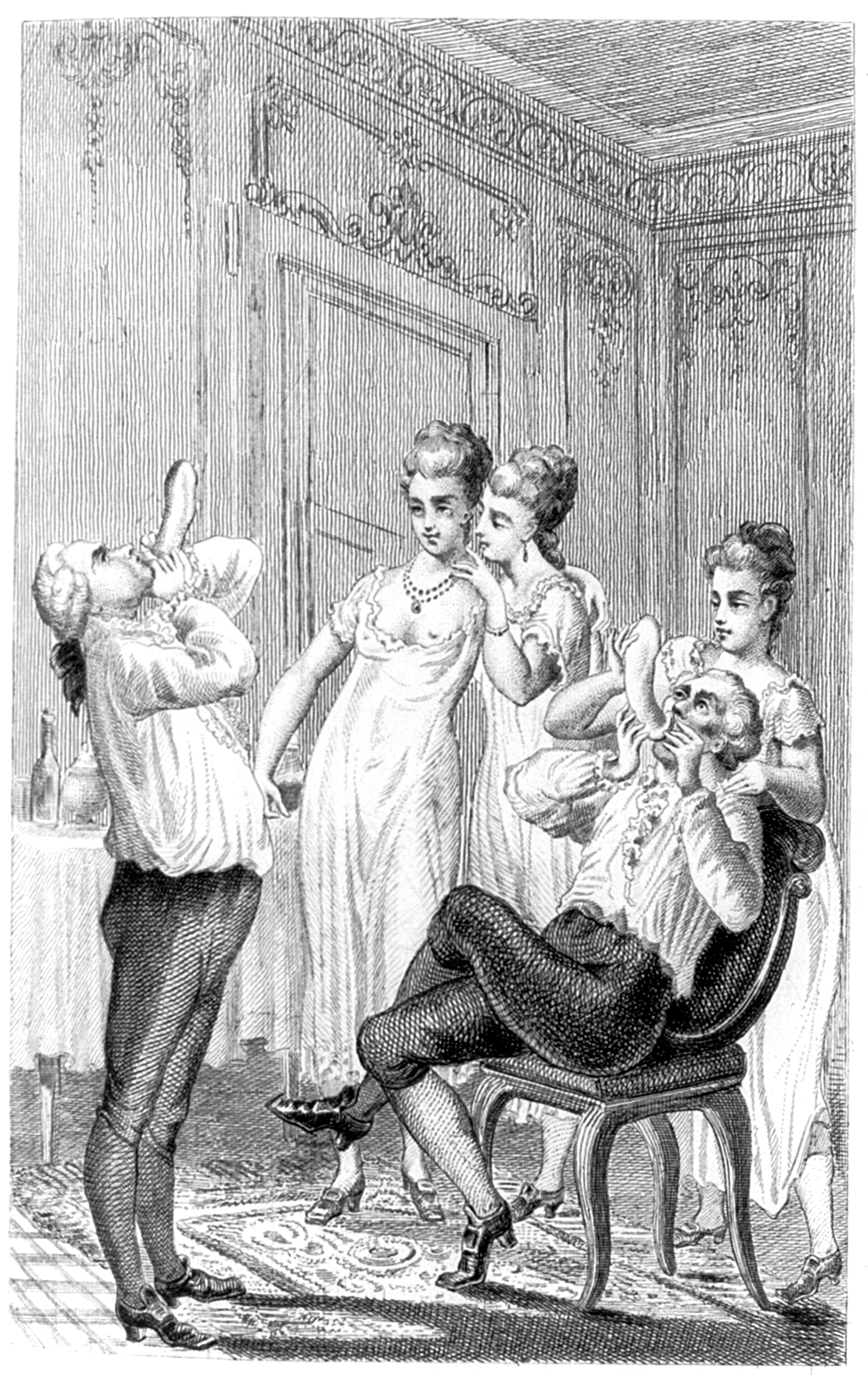
File:Condoomgebruik in de 19e eeuw.png
The Inky Fool completely misunderstood the idea.

Thursday, 26 January 2012

The Cut


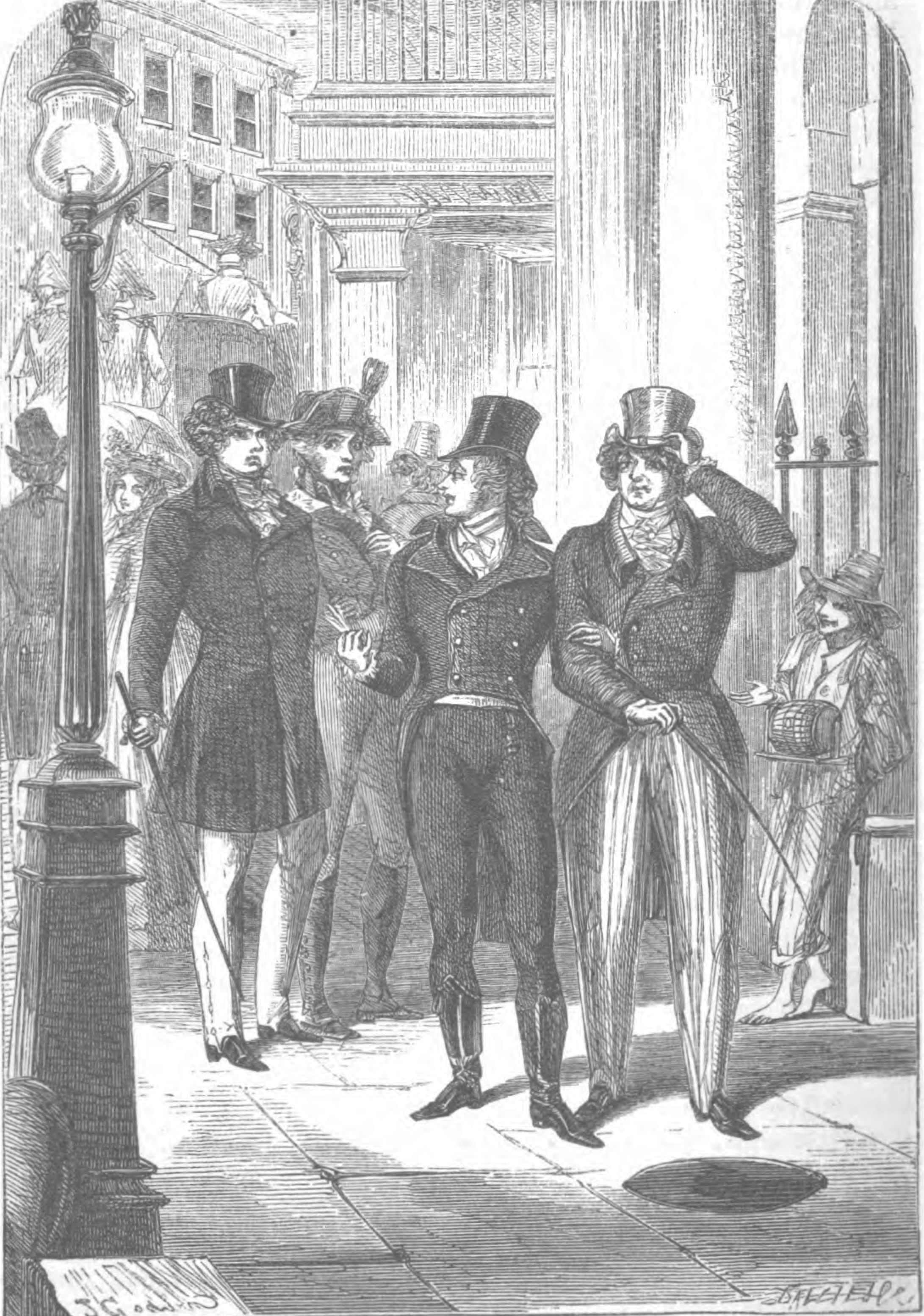
File:Who's your fat friend.pngHere is some Cambridge University slang from the eighteenth century:

TO CUT, (CAMBRIDGE). To renounce acquaintance with any one is to CUT him. There are several species of the CUT. Such as the cut direct, the cut indirect, the cut sublime, the cut infernal, etc. The cut direct, is to start across the street, at the approach of the obnoxious person in order to avoid him. The cut indirect, is to look another way, and pass without appearing to observe him. The cut sublime, is to admire the top of King's College Chapel, or the beauty of the passing clouds, till he is out of sight. The cut infernal, is to analyse the arrangement of your shoe-strings, for the same purpose.

I have done all four of these, but never knew that there was a name for them.

Sorry, I didn't see you there.

Wednesday, 25 January 2012

Dust and Dustmen


Dust used to be the subject of poetry. Hamlet, in his great prose speech, asks of mankind:

And yet, to me, what is this quintessence of dust? man delights not
me...

Because men are made of dust, and to dust we return. Ashes to ashes, dust to dust, fun to funky. So Auden also asked:

May I, composed like them
Of Eros and dust,
Beleaguered by the same
Negation and despair,
Show an affirming flame.

In which he merely adds sexual appetite to the vacuum-fodder. It was therefore rather pleasant to find this entry in an old slang dictionary of 1811:

DUSTMAN. A dead man: your father is a dustman.

Which lends a certain poignancy to this song:

Tuesday, 24 January 2012

Epitomy


An epitomy was, originally, a brief summary of a book - a sort of Reader's Digest precis for people who couldn't be bothered to read the whole thing. Indeed, the Greek epitome means cut. It's from this original meaning that we get the modern sense of paragon or perfect type, for if somebody says that he's the epitomy of good manners what they mean is that you don't need to bother to read a whole book on etiquette: just look at him.

Equally, if you epitomise something, you edit it.

Cole Porter once did some research on epitomies. He was on a cruise and writing a song about the best things in the world. So he asked all his fellow passengers to name the thing that they considered the tops. The result was this song.

Monday, 23 January 2012

Grum


Dr Johnson's dictionary contains the splendid word grum which means... well I hardly need to tell you what it means: a bit grim and bit glum. The word died out in the mid nineteenth century, but, if you felt like reviving it, everybody would understand exactly what you meant.

(And, for vital information on the practice of glumming, see this old post).