There are no polar bears at the South Pole because it's etymologically impossible.
If you look to the north on a clear night (an idea that seems extraordinary in Britain at the moment), you will see the constellations of Ursa Major and Ursa Minor. Ursa Minor is so far North that it even contains the Pole Star.
Ursa is just the Latin word for bear (and constellation is Latin for together stars (con-stella)). That's why louche English astronomers will call these constellations the Great Bear and the Little Bear.
But Greek astronomers, being Greek, didn't use either the Latin ursa or English bear, they used the Greek work Arctos, which also just means bear.
So the Arctic is, literally, the bear-place. And the opposite end of the world is the Antarctic or Anti-Arctic or No-Bears-Here-Place.
And that's why polar bears don't move to the Antarctic. They feel unwelcome, etymologically speaking. This may be a ploy on the part of the penguins.
Mind you, polar bears are etymologically impossible, because bear come from the Proto-Germanic *bero, which means brown.
So brown bears are brown browns.
Oh, and grizzly bears are etymologically grey browns (from French gris), which is why I only use the Latin name Ursus Horribilis.
And some bears have no fur at all. I despise them. I can't bear bare bears.
The Inky Fool defending the etymological purity of Antarctica
P.S. Only a week until Short History of Drunkenness comes out in the USA
I'm off to Chile for a fortnight's holiday. The main thing about Chile, etymologically speaking, is that it is not the origin of the word chili meaning spicy stuff in food. That word comes from the Aztecs who lived all the way up in Mexico. Oddly enough, our standard word for the Aztec equivalent of beer - pulque - is from a language spoken in what's now Chile: Araucanian to be precise. This language also gave us gaucho, meaning wanderer, and poncho, meaning woolen cloth.
So where does the name Chile come from? Nobody is very certain. But one theory is that it comes from a lost native language and means cold place or land's end. In which case it would be appropriate as the tip of Chile - Tierra del Fuego, or land of fire - is very cold even now, in their midsummer.
Santiago, though, is rather warm, which is why I'm going.
I've been going through A Short History of Drunkenness for the American edition, changing those words and phrases that would be incomprehensible on the farther shores of the Atlantic. It's a process that I find utterly fascinating.
Some of the phrases are expected: "Does exactly what it says on the tin" comes from a British advertising campaign of the 1990s. I was surprised that rumpy-pumpy doesn't exist in America, but it was easily replaced with hanky-panky. But I became particularly curious about "lost his rag". This phrase not only doesn't exist in America, but I didn't really know why it existed in Britain.
The phrase is first recorded in 1928:
Finally, losing his rag completely, he extended his fingers to his nose and challenged any three men in the audience to come up on the platform and fight him.
This goes back to an old Yorkshire term "to get somebody's rag out", and that in turn appears to go back to the use of rag to mean tease, torment, scold etc. That's the same rag that you have in Rag-Week at University: the first week when everybody chases each other around rather boisterously. And it's also the origin of the American phrase to rag on sombody as in this line from 1979:
Critics all over the country..for years and years have been ragging on Joyce Carol Oates.
So Americans, it turns out, can be ragged on, but their rag cannot be gotten out, and nor can it ever be lost; they're just too good tempered.
The other problematic differences were the absence of Postman Pat on those distant shores (the British version points out that a Sumerian drinking song can be sung to the theme music), and finding a precise American equivalent of Maidstone.
Anyhow, A Short History of Drunkenness is already available in Britain, indeed the Spectator says that:
My favourite book of this and possibly any other Christmas is Mark Forsyth's A Short History of Drunkenness
And as it would make the perfect present for just about anybody, it should immediately be bought from a bookshop or one of these people:
And for all who don't know or remember here is the original Ronseal advertisement that changed our language, followed by the original Postman Pat theme.
(American readers should note that the majority of British English is now based on this one advertisement)
An American asked me the other day why so many English pop stars sing with American accents. Actually, that's not true. An American at the next table in the pub was asking loudly why English pop stars sing with American accents and I thought it would be a bit weird to lean across and explain. But if I had, I'd have said the following.
From here on in, when I say "American" I mean the Mid-West accent, and when I say English I mean BBC English - this is largely because no pop stars sound Cornish. There are a bunch of differences between these two accents, but a lot of them involve vowels and are hard to write about, so, for the moment, let's concentrate on a nice simple one. In American, when a T-sound appears between two vowels it turns into a D. So butter in American is pronounced budder;pity is pronounced piddy; and little is liddle. An English soldier has a medal made out of metal; an American soldier has a medal made out of medal. The English say better, the Americans say bedder.
The American pronunciation is actually a lot easier on the tongue. Try it. To pronounce the T in the middle of better you need to flick your tongue all the forward to touch your upper teeth and then pull it back in time for the vowel. In American all you have to do to make that D-sound is tap your tongue against the roof of your mouth.
In fact, most of the standard differences in the American accent are easier to pronounce than their English counterparts. You could even, if you were so minded, say that they were lazier. This may make English people feel superior. We proud Brits take the time to pronounce things properly, unlike those lackadaisical Yanks. Huzzah!
But we shouldn't think that, because sometimes the English pronunciation is the lazier/easier one. The English, for example, do not bother to pronounce the R on the end of words. Instead, we just say Uh. So singer in English becomes sing-uh and don't bother is don't both-uh. The Americans, with their strong work ethic and can-do attitude make sure that they say singerr and botherr.
So, when, just now, I said that the English say better and the Americans say bedder, I lied. In fact:
The English say bettuh (proper T, lazy R).
The Americans say bedderr (lazy T, proper R)
By proper here, I don't mean right and wrong. In fact, I've just been sitting here trying to say betterr, and it sounds very odd. I think I may be Welsh. It doesn't matter.
The important thing is what happens when you pronounce both sounds the lazy way. You end up with bedduh - a sort of strange, hybrid, transatlantic mongrel of a word. But who would be so lazy as say it that way?
The answer is, somebody who's concentrating on breathing, and hitting the right note, and getting the right emotion in, whilst simultaneously playing the piano. Here is a video of Paul McCartney pronouncing the word better. (And, yes, that's why I chose the word. Clever, aren't I?)
Bedduh, bedduh, bedduh, BEDDUH.
Here, on the other hand, is Mr Wilson Pickett, an American, singing the same song, and pronouncing better as bedduh. The lazy way on both sounds.
And if you want a few others, here's Elvis, Katy Perry, Elton John (for one verse), and a Chinese lady called Yao Si Ting. They all sing Bedduh.
They aren't trying to sing in an American accent or in a British accent; they're just trying to sing.
Singing is difficult so both Americans and Brits default to the easier pronunciation of the consonants. With most consonants the easier pronunciation is American, so both Brits and Americans tend to sound pretty American. Or to be more precise their accent comes from somewhere about 150 nautical miles east of New York.
Of course, there are some exceptions to this. First, classically trained singers spend a lot of time on training to get their words just right: fully pronounced consonants and nice clear vowels. They have to spend a lot of time on this because it's very, very difficult.
Second, some English singers do try to sound American. Michael Jagger is definitely putting it on.
Third, some English singers do pronounce their Ts. Roger Waters springs to mind.
But most of the times they're just taking the route of least resistance. D-ing their Ts, unrounding their Os and dropping their yods.
And if you're wondering what that last term means, English people put a sort of Y sound in words like tune and new, which we pronounce t-yune and n-yoo (to exaggerate it slightly), but which Americans often pronounce as toon and noo. This is called yod-dropping.
And I shall leave you with mystery:based on her yods, what nationality is the female singer of A Whole New World?
That's right, she's from the Philippines.
Anyhow, there are lots of other differences between American English and British English. I spent yesterday going through my new book, A Short History of Drunkenness, changing incomprehensible Britishisms so that they would be comprehensible for the American edition (out in May). This is troublesome when it comes to the drink that Scotsmen call whisky and Americans call whiskey.
The Spectator said this week that:
My favourite book of this and possibly any other Christmas is Mark Forsyth's A Short History of Drunkenness
Which means that you should almost certainly buy it immediately and thus solve all your Christmas-present-buying problems in one. You can get it in any good bookshop, or from these people.
A repost from 2010:
Eskimos have no more words for snow than we do. The notion that they do is a myth, a mirage, and a cold white lie. They certainly don't have fifty of the damned things.
We have a few words of our own: snow, blizzard, sleet, slush, powder and neve (a field of even snow). And if we feel this isn't enough, we simply invent compounds: snowstorm, snow-flake, snow-flurry, snow drift, snowfall and snowperson.
It is exactly the same in your average igloo. The Eskimo-Aleut languages (of which there are several) have a few bases and many compounds. So the next time somebody repeats this porkie to you, cudgel him.
The urban myth of the Eskimo's verbosity did give rise to the young and useful word snowclone. A snowclone is hackneyed sentence structure. X is the new rock'n'roll. What do you get if you cross an X with a Y?*
The reason it's called a snowclone is that so many hackneyed hacks have written something along the lines of:
If Eskimos have N words for snow, X surely have Y words for Z.
Snowclone was invented by a language blog called Language Log, which goes to show something, but I don't know what.
The past tense of snow used to be snew, on the same pattern as grow and grew or know and knew. So it snew in the night.
This from Froissart's Chronicles (1525):
Also it rayned, blewe, & snewe, that it was a mervaylouse yvell wether.
And this from Holinshed's describing special effects in a theatrical production of Dido in 1583:
It hailed small confects, rained rosewater, and snew an artificiall kind of snow.
*I imagine that the answer would be that you'd get back together with her.
Sometimes an etymology is so obvious, once you see it, that you can't think why you never saw it at all. A dumbbell was, originally, a bell that didn't ring.
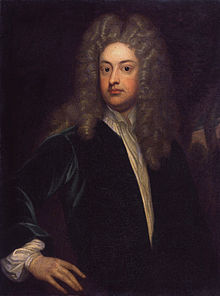
Hence the dumb-bell. The first reference is from Joseph Addison writing in The Spectator in 1711:
For my own part, when I am in town, for want of these opportunities, I exercise my self an hour every morning upon a dumb bell, that is placed in a corner of my room, and pleases me the more because it does every thing I require in the most profound silence. My landlady and her daughters are so well acquainted with my hours of exercise, that they never come into my room to disturb me while I am ringing.
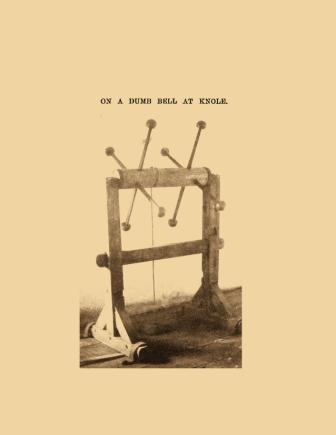
So what exactly did such a mute piece of gym equipment look like? Well, here's one from the Seventeenth Century that survives (I think) at Knole House in Kent:
At some point somebody seems to have taken those sticks with the weights on the end off the dumb bell and started using them on their own. Thus the modern dumbbell.
In other news, tonight I shall be at Waterstones Piccadilly from seven until nine signing A Short History of Drunkenness, other books by me, cheques, Czechs and off.
Anybody who's read The Merry Wives of Windsor (written in about 1598) will have been surprised to see a reference in it to Charles Dickens (born 1812). It's in Act II scene 2 and goes like this:
MISTRESS PAGE I cannot tell what the dickens his name is my husband had him of. What do you call your knight's name, sirrah? ROBIN Sir John Falstaff.
The reason for this is feat of anachronism is that the Dickens in what the dickens has nothing to do with the surname; it is, instead, a euphemism for the Devil. It may be that there was the Devil, and then there was a little devil or devilkins. Kin is common English diminutive as in lambkin or bunnykins or napkin (a nap used to be a tablecloth).
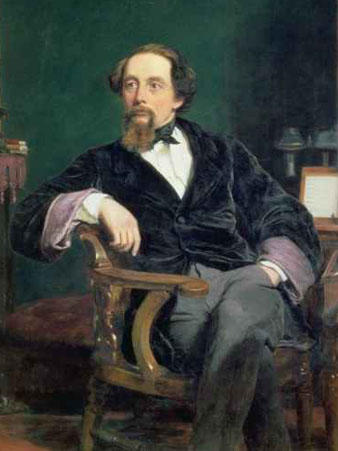
The diminutive kin is also the source of the English surname Dickens which is Little Richard (if you're into rock'n'roll) or Little Dick (if you're a puerile giggler, as I am). And the surname Dickens is the source of Charles Dickens and Charles Dickens wrote A Christmas Carol, which is the best Christmas story ever written, and there's an actor called Martin Prest who can recite the whole thing, and he's going to be doing so on Monday in Clapham at Bar Humbug, and I'm going to be interrupting him to explain the origins of Christmas Traditions and it ought to be a great show, so you should come along if you're in London.
Meanwhile I'm doing a talk at Hungerford Books tomorrow (Wednesday 5th), and on Thursday Evening I shall be sitting in Waterstones Piccadilly with a pen ready to sign any and all books that are thrown at me*.
*In all seriousness, I was once doing a signing in Waterstones Piccadilly and a foreign gentleman came up to me, put a book in front of me, and asked me to sign it. I had a good look at it and explained to him that it wasn't my book. "No," he said. "You sign it."
"But I can't really sign it," I replied, "if I didn't write it."
"You are author, yes?"
"Well, yes, but not..."
"You sign it. It's for my daughter."
"But this is by..." I had a look, and the book didn't actually have an author, or not one who'd been prepared to put their name to it, which was surprising as it was a self-help book, and the cover said it was all about feeling "self-worth".
"It's for my daughter. You sign it."
He seemed irked by my recalcitrance, and so I gave in and I signed it E.L. James.
He seemed very happy.

 There are no polar bears at the South Pole because it's etymologically impossible.







 Posts
Posts


