Showing posts with label Etymology. Show all posts

Monday, 28 May 2012

Bashful Bah


Bashful is one of those wonderful words without an opposite. Try as you might, nobody will ever call you bashless. Which poses the question: what the devil is bash and how did you get so full of it?

To answer that question one can turn to the Old Curiosity Shop where Dickens mentions that Dick Swiveller "spends all his money on his friends and is Bah!'d for his pains."

By this Dickens means that Swiveller's friends say Bah to him, Bah being an exclamation of contempt. Dickens looks terribly original, but in fact bah has (probably - this is all merely the best theory) been verbed before, by the French and Normans a thousand years ago.

First, you should note that bah comes straight from the French. But the Normans had a verb ebahir, which meant to be astonished, or more literally to be reduced to saying 'bah' in amazement. This got altered to abaïr, and that got altered to abaissir and that got altered to abash.

These days it's easy to be abashed in the passive; but once upon a time it was just as common to go around abashing people until they were abashed, or just bashed, at which point they became bashful.

Thus, by a preposterously serpentine route, Dick Swiveller is abashed.

None of which has anything to do with a bash on the head, which appears to come from the Old Norse who had a deplorable habit of doing a lot of such bashing.

File:Wikinger.jpg
Ouch.

Wednesday, 18 April 2012

Smoking a Cicada


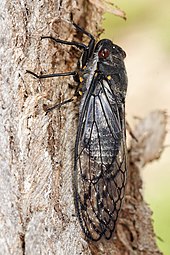
I was rather astonished to discover that a cigar is, probably, so called because it resembles a cicada. So saith the OED anyhow. You see, the Spanish for cicada is cigarra and cicadas are said to have bodies that resemble a cigar in shape.

Not being terribly familiar with cicadas (they rarely trouble the sodden residents of Clerkenwell), I had to look them up on Google and... well... have a look at that picture on the right. I can't imagine smoking such a thing by mistake.

But then, then I saw a picture of a cicada cocoon. And suddenly it all made sense. Rather strangely (to my tongue at least), cicadas are often cooked in their cocoons and eaten. Here is a picture:

It's those ones in the middle. Time for lunch, I think.

And, of course, just as a kitchenette is a little kitchen and a maisonette is a little maison, a cigarette is just a little cigar with the stress moved to the first syllable.

Friday, 6 April 2012

Good Friday


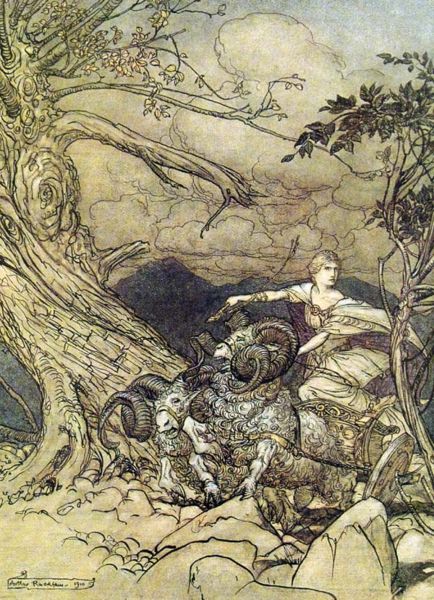
File:Ring23.jpgFriday is Frigg's day; and Frigg, wife of Odin, was the goddess of married love. So Good Friday would therefore be the day of good married loving.

Incidentally, this crosses over to the romance languages where Friday is sacred to the Roman goddess of love, Venus. Thus vendredi in French.

Which brings us round to remembering embryo chickens, which we should all do at this time of year (explanation in the lines from Auden below):

It was Easter as I walked in the public gardens,
Hearing the frogs exhaling from the pond,
Watching traffic of magnificent cloud
Moving without anxiety on open sky—
Season when lovers and writers find
An altering speech for altering things,
An emphasis on new names, on the arm
A fresh hand with fresh power.
But thinking so I came at once
Where solitary man sat weeping on a bench,
Hanging his head down, with his mouth distorted
Helpless and ugly as an embryo chicken.


So I remember all of those whose death
Is necessary condition of the season’s putting forth,
Who, sorry in this time, look only back
To Christmas intimacy, a winter dialogue
Fading in silence, leaving them in tears.


Some more Auden lines

Wednesday, 4 April 2012

Flourishing Paraphs


Para was Greek for beside. So lines that are parallel were para allelois or beside each other and those who are paranoid were para nous or, literally, beside their minds. Therefore, if you made a little mark in the margin of a Greek text to indicate a break or a new section this was written beside the text and was a para-graph.

Paragraph can, and has, been shortened and corrupted in all sorts of ways. John Florio's 1598 Worlde of Wordes has:

Paragrafo, a paragraffe, a paraffe, a pilcrow, whatsoever is contained in one sentence.

Pilcrow is still the standard term for the paragraph mark ¶ that you can sometimes see. But paraph has retained much more of the original meaning. You see a paraph is the technical name for the long flourishing extravagant line with which so many people end their signatures. Take, for example, Benjamin Franklin's signature:


Now that is a paraph and a half.

Speaking of a paraph-and-a-halfs, an academic fellow once told me that the best way to spot the weak point in a long essay is to flick through and find the longest paragraph, because that will always be where the writer was most confused. It's a rather good trick, and saves actually reading things.

Monday, 26 March 2012

Jogging


If the sight of a jogger jogging in the park jogs your memory, that is thorougly appropriate. To jog originally meant to jerk. So if your memory receives a jolt, it is jogged, as in the tract of 1778: An Antidote to Popery; or, the Protestant's Memory jogg'd in Season.

However, if what happens if you jerk and jolt yourself repeatedly? Well, obviously you could just add the frequentative suffix -le and get joggle. But you might find yourself moving along in little jolts, or as Dr Johnson put it in his dictionary:

Jog: to move with small shocks like those of a low trot.

So a joggling jogger who jogs your memory, is all one verb jogging around the language. However, it has no relation to juggling - which is actually a cognate of jocular.

 
Etymologically unnecessary.

Wednesday, 21 March 2012

Manufactured Manure


It's always rather pleasant to watch a word shift in meanings until it means the opposite of itself. Such a word is manufactured, which is Latin for handmade. Manus is hand, as in manual, and facture is making as in, well, a factory, where things are made. But the difference between a factory and a manufactory is the handiwork.

Thus an Elizabethan chap could write:

Yet the image is rather a manufacture, to wit, a thing wrought vpon a creature by the artificer's hand...

And yet now, we would consider handmade and manufactured to be antonyms.

Another lost hand of etymology is manure. Once upon a time manuring was simply working by hand. People would manure their farms and gardens until their hands were sore. But obviously, a central part of this horticultural handiwork, was spreading dung upon the land. Mind you, a 1561 translation of Calvin could still have the line:

The worde of God‥if it light upon a soul manured with the hand of the heavenly spirit, it will bee most fruitfull.

Which is something to consider next time you're getting a manicure.


Wednesday, 14 March 2012

Etiquette on Tick


Once upon a long time ago in France, there was the word étiquette. But it didn't have the meaning that it has today. Etiquette was nothing to do with passing the port the right way through a revolving door. An étiquette was just a small piece of paper.

So far as anybody can tell (and nobody is sure of this) people would write down the rules of the court on a small piece of paper and hand them out to visitors, or pocket them so they didn't forget who was meant to give way to whom. Thus our English etiquette.

However, the primary French sense also got straight into our language by the much simpler route of dropping the E at the beginning. Etiquette became ticket: train tickets, political tickets, lottery tickets. Even the small piece of paper behind the bar on which your drinks bill is tallied is a ticket. That's why, when you buy something on credit, you buy it on tick.

Court etiquette used to be a terribly complex and time consuming thing. For example, when you got up to leave from supper everybody had to leave in reverse order of seniority, with the king going last. That meant that you had to size up everybody else at the table and shuffle around and wonder whether it was your turn (unless you slyly consulted your étiquette) and it all got very awkward and slow. That's why when Lady Macbeth tells her dinner guests to leave immediately, she says:

At once, good night:
Stand not upon the order of your going,
But go at once.

The order there isn't her command, it's about not standing on ceremony and just Getting Out Now.


Monday, 12 March 2012

Trumps and Triumphs


It may seem odd that charges in the newspapers are almost invariably trumped up. The cause can be found in a bit of etymology which leads, like all good roads, back to Shakespeare. In Antony and Cleopatra, when Antony realises that all is lost, he complains that Cleopatra has:

Pack'd cards with Caesar, and false-play'd my glory
Unto an enemy's triumph.

The card-playing metaphor continues to the very last word of that quotation, because a triumph, or terrestrial triumph as it was more usually called, was an old term for a winning card.

It didn't take long for a triumph card to get slurred and shortened to trump card. Then trump got verbed and you became able to trump your opponent.

Trumps are annoying things when your opponent has them, and so phrases emerged like trumping upon someone, which meant to throw out an obstacle as one card player will do to another. So trump became a synonym for any unexpected obstacle, and trumping became a term for producing such an obstacle out of the blue.

So if you arrest somebody out of the blue just to stop them doing something, then you trump up charges, like a card player spoiling your winning ace.

The Detection of Kepplinger - card cheating
The Inky Fool loses a trick

Friday, 9 March 2012

Orgiophant


An orgiophant is, according to the OED, an overseer of orgies. I'm not sure whether this is a useful word for you, dear reader, but I thought I'd tell you in case the word ever popped up in the jobs section of the classified ads.

I imagine that your main duties would be getting the orgial started, as an orgial is a song sung at orgies. That and looking after the clothes.

Anyway, it's etymologically appropriate as orgy is probably related to the Greek ergon meaning to work. If this is so, then orgy would be connected to ergonomics (the study of people at work), and I suppose that would be another concern of the orgiophant.

The Inky Fool knew this would be a tricky one.

Monday, 5 March 2012

Opportunity Blows


File:TempleOfPortunus-ForumBoarium.jpg
The temple of Portunus
If you're a sailor in a sailboat then you care a lot about winds, and the best sort of winds are those that blow your ship towards the port that's your destination. Or at least, they're the best sort when you're on the open sea.

If you're a sailor who happens to speak Latin, then you will describe these winds as ob portunus, or towards the port, because Portunus was the god of harbours. These ob portunus winds are good and favourable and represent, for the homesick seasick sailor, an opportunity.

By a reverse of this process, you can really pick the wrong moment to ask somebody for something and thus you are im-portuning them.

Etymologically speaking, this has a pleasant side-effect. Port wine is named after Portugal which is named after the Portus Cale. So if you hurl yourself towards an unguarded bottle of port then you have become an opportunist.

When leaving port, you should rely more on the tides than the winds. Wait till high tide, or flood, and then let the retreating waters pull your boat out. To see exactly how the metaphor survives have a look at this passage from Shakespeare.

There is a tide in the affairs of men,
Which, taken at the flood, leads on to fortune;
Omitted, all the voyage of their life
Is bound in shallows and in miseries.
On such a full sea are we now afloat;
And we must take the current when it serves,
Or lose our ventures.

File:Cesar-sa mort.jpg
An opportunity

Friday, 2 March 2012

Cuckoos, Cuckolds and Ale


Being a city dweller, the seasons are not measured for me as they were for the rustics who formed much of our language. I do not see the tender daffydilly poking its petals towards the questing vole, or any of the other signs of spring that my forbears noted. In fact, spring to me is the season in which the restaurants start to put their tables outside on the pavement. Instead of swallows, I have crowds of happy smokers loitering outside the pub on the corner. Instead of melting snows, I have the slow disappearance of hats.

I shall therefore, probably, never know the joys of the cuckoo ale, which is described thus in a magazine from 1821:

A singular custom prevails in Shropshire which is, we believe peculiar to that county. As soon as the first cuckoo has been heard, all the labouring classes leave work, if in the middle of the day, and the time is devoted to mirth and jollity, over what is called the cuckoo ale. 


The cuckoos will never, I fear, return to Clerkenwell, although the cuckolds may. As is well known, cuckoos lay their eggs in the nests of other birds, and therefore if someone else has lain in your bed, you have been cuckooed or cuckolded.

Also, the bone at the base of your spine is called the coccyx because it resembles, supposedly, a cuckoo's beak.

Now, if you'll excuse me, I'm off to devote myself to mirth and jollity. The cuckoos may not arrive till April, but the pub tables are out in force.


P.S. I know that Google is being odd about this site having malware. I'm pretty convinced it doesn't. It's still the same old blogspot thing underneath. There's probably just one link somewhere on one post that goes to a site that's no good, but I can't for the life of me work out which one it is.

Wednesday, 29 February 2012

Some Handsome Hand


Sometimes, the original meaning of a word is so bloody obvious that you can't believe that you don't use it that way any more. Such a word is handsome, which apparently is as it does - a phrase I have never understood. When you realise that handsome used to be a synonym for handy, it seems obvious.

Something that is hand-some is, or was back in the fifteenth century, suitable for the hands. It was easily handle-able. It was conveniently to hand. It was handy.

From convenient it was a short shift in meaning to appropriate. And because a large reward is always felt to be an appropriate one, handsome then started to mean big - a meaning we still use in phrases like "He was handsomely rewarded."

And then, from the sense of being a good size, you got the modern meaning of human, usually male, beauty.

Mind you, this may not be the case in America. Certainly, in the C19th an Englishman could still observe that on the far side of the Pond:

A writer is styled ‘a very handsome author’, meaning a good and clever one, and quite irrespective of his appearance, which may be the reverse of comely.

Not handsome, then.

Monday, 27 February 2012

Leper Juice


Nobody knows where the dan in dandruff comes from, but the second syllable probably derives from the Old English hreofla meaning leper. Perhaps there was a particular flaky chap called Dan.

I hate to tell you this, but there is a thing called leper juice. It's the stuff in the lesions. The things you find in the OED. I'm off to start a soft drinks company.

Incidentally, the World Health Organisation think leprosy's got a bad reputation and prefer to call it Hansen's Disease. This must be a great comfort to those dying of leprosy, but not to people called Hansen.

Not a speck in sight.

Wednesday, 22 February 2012

Soda, Sodium and Pop


It's an odd little reverse of the expected that sodium is actually derived from soda, which was a fifteenth century term for a mysterious alkaline substance. Sodium, was not isolated and named until 1807. Soda itself probably comes from the Arabic suwwad, which is the name of a sort of herb.

The chap who invented, or discovered, sodium, was Sir Humphry Davy, who has great literary significance as he was the subject of the first ever Clerihew, an odd sort of four-line poem that has a man's name as a first line.

Sir Humphry Davy
Abominated gravy.
He lived in the odium
Of having discovered sodium.

He was also the first Englishman to use the word potassium, which is named after potash.

Soda water is first recorded in 1802 as a name for fizzy water with bicarbonate of soda in it. To an Englishman, soda remains just the name for carbonated water, however in America it is a generic name for fizzy drinks. This map shows the Arab word's infiltration of the United States (double click to enlarge):

Thursday, 2 February 2012

February and Februation


DON PEDRO
Good morrow, Benedick. Why, what's the matter,
That you have such a February face,
So full of frost, of storm and cloudiness?
- Much Ado About Nothing

As we are now in February, you may as well know that this is the month of purification; specifically the Roman festival of purification or Februarius was held on the 15th.

Februa was the Latin for purification, and quite possibly derived from an older word for sulphur, making this sulphur-month. This means that February has some rather odd neighbours in the dictionary, such as februate, which means to purge souls by sacrifice or prayer.

Before this new-fangled Roman stuff came in, the Anglo-Saxons had a much apter name for the month. They called it Solmonath, or Mud-Month.

Mind you, the Venerable Bede called it the month of cakes, because apparently that's what pagans gave to their gods for a winter's snack.


The Inky Fool fondling an invisible cow

Monday, 30 January 2012

How John Donne Invented the Hedge Fund


I've always, for some whimsical reason, liked to imagine hedge funds as rustic financial institutions based at the edge of fields. Etymologically I am, of course, right. And it's all down to the poet John Donne.

Once upon a time there were hedges. Bushy things at the end of your garden and the like. Then came the verb to hedge, which meant to enclose within a hedge. So you could, for example, hedge in your garden.

Then, in the early seventeenth century John Donne promised a chap called Sir Henry Goodere that he would send him a letter in verse. He didn't get round to it, and to make matters worse Goodere wrote him one, which meant that Donne really owed him. Or, as Donne put it in an apologetic letter:

I owed you a Letter in verse before by mine own promise, and now that you think that you have hedged in that debt by a greater by your Letter in verse, I think it now most seasonable and fashionable for me to break.

That's the first recorded usage of the phrase hedge in meaning to secure a bad debt by making it part of a larger one for which better security has been obtained. Although this was the first common financial use of hedging.


From that sense of making your debts safe, came the idea of hedging in your bets by betting on more than one horse which pops up in 1672. From there you get the idea of finding two near-identical things at different prices, buying the cheaper and shorting the dearer. And thus the hedge fund.

None of which has anything to do with the old slang term of hedge-whore, which denoted a kind of wandering prostitute, not attached to any brothel, who therefore bestowed her favours "on the wayside, under a hedge".


Someday, I'm going to write a poem in a letter.

Tuesday, 24 January 2012

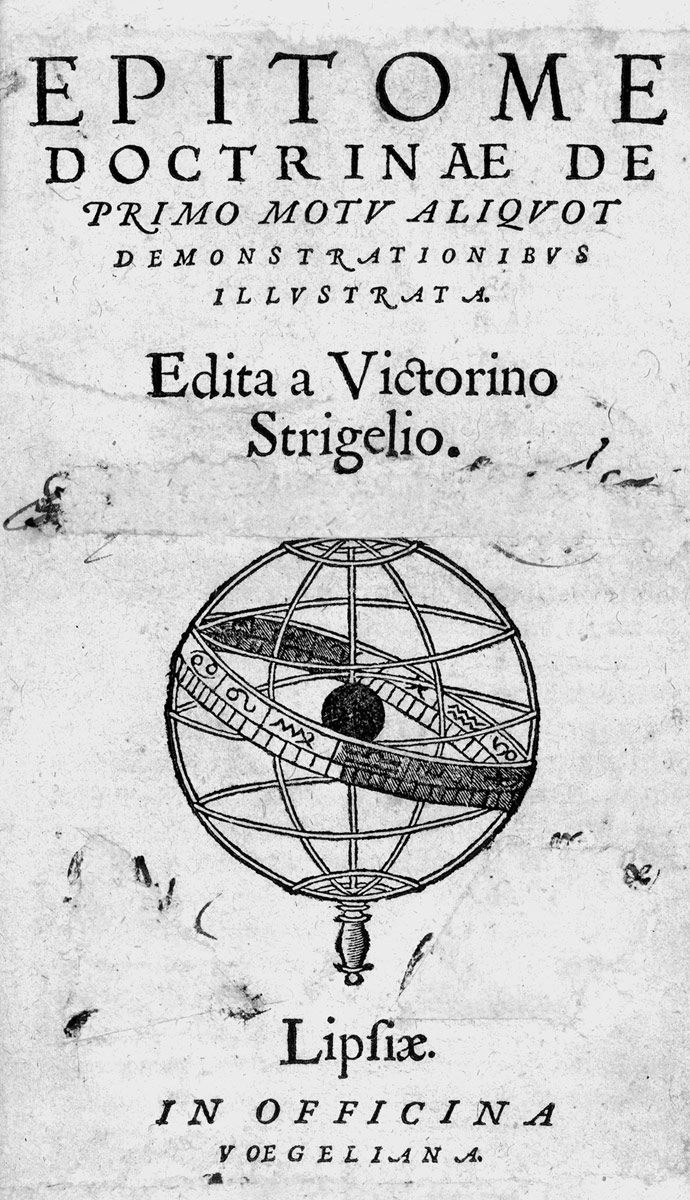
Epitomy


An epitomy was, originally, a brief summary of a book - a sort of Reader's Digest precis for people who couldn't be bothered to read the whole thing. Indeed, the Greek epitome means cut. It's from this original meaning that we get the modern sense of paragon or perfect type, for if somebody says that he's the epitomy of good manners what they mean is that you don't need to bother to read a whole book on etiquette: just look at him.

Equally, if you epitomise something, you edit it.

Cole Porter once did some research on epitomies. He was on a cruise and writing a song about the best things in the world. So he asked all his fellow passengers to name the thing that they considered the tops. The result was this song.

Monday, 16 January 2012

Guinea


From the Dear Dogberry page comes the question of Guinea: Guinea the African country, New Guinea the Asian country, and guinea the unit of currency. They are all connected. Let us start, as the word did, with West Africa.

There is in the Tuareg languages of north western Africa a word aginaw, which means black people; and it's just possible that this is why the Portuguese decided to call a stretch of the north west African coast Guiné. Just possible, but not certain.

What is utterly certain is that Ynigo Ortez de Retez had a great surprise when he got to the Far East. He was a Portuguese explorer who knew the Guiné coast and its black, frizzy-haired inhabitants. But he went further, all the way round Africa to Asia, where people had straight hair and lighter skins until... he got to an island east even of the Malays that was populated by black fellows with frizzy hair, just like the chaps back in Guinea (see picture). He therefore decided to call it New Guinea, and the name stuck. Papua is probably derived from the Malay word for frizzy hair.

Back in Africa the British regarded the Guinea coast with envious eyes, partially because it had some lovely gold mines. In 1663 we started to use this gold to make coins with little pictures of elephants on them and one eighty-ninth of a pound of 22-carat Guinea gold in each. One of these coins was therefore worth twenty silver shillings.

But the prices of gold and silver fluctuate, and they fluctuate in relation to each other. So when gold was expensive and silver was cheap, you could find that a golden guinea was worth thirty silver shillings and so on and so forth. Eventually, in 1717, the value was fixed at twenty one shillings to one guinea. In modern parlance this means that a guinea is worth £1.05. The last guinea was minted in 1813, however, for reasons best known to nobody, it is still the currency in which racehorses are traded.

Notice the little pachyderm at the bottom

Monday, 9 January 2012

Licking Lechers


It is, perhaps, appropriate that the English word lecher comes from the French for licker, although it may rather cramp the thoroughgoing lecher's style.

The French for lick is still lecher, which is why the French for window shopping is faire du lèche-vitrine, which literally means to go window licking.  Meanwhile over in English slang a window-licker is a rude way to refer to somebody who isn't right in the head.

It's also always amused me when talking to academics that, unless you have Olivier-like diction, lecher and lecture sound identical.

Wednesday, 4 January 2012

Rasher


This morning, as I incinerated my breakfast, I was reminded of the etymology of the word rasher, as in a rasher of bacon. There are two theories on the subject. The first rather tedious one is that it's cognate with razor and therefore means a thin strip that has been cut off.

However, the first etymologist to tackle the rasher was John Minsheu (1560-1627). He, in his Ductor in Linguas, gives an explanation that is much more fun, though not necessarily much more true.

A Rasher on the coales, q. rashly or hastily roasted.

This does, at least, tally with my experience.

Every damn morning.