Tuesday, 11 October 2011

Red Herrings


Yesterday, I explained how harking back was to do with calling back dogs who have lost the trail of scent. Harking back is thoroughly necessary when the dogs are following a red herring. Hounds love the smell of a good red herring. Thomas Nashe observed, back in 1599, that:

Next, to draw on hounds to a sent, to a redde herring skinne there is nothing comparable.

So, if you want to lead a dog astray the best thing to do is to drag a red herring along the ground, thus making a false trail of scent for them to run after. It appears that this was originally done just to give the dogs and horses some exercise. You laid out a herring trail and then went for a jolly good gallop. This from the Gentleman's Recreation of 1697:

Now, that I may not leave you in Ignorance what a Train-scent is, I shall acquaint you that it has its Name as I suppose, from the Manner of it, viz. the trailing or dragging of a dead Cat or Fox (and in Case of Necessity a Red-herring) three or four Miles, (according to the Will of the Rider, or the Directions given him) and then laying the Dogs on the Scent.

Nineteenth century huntsmen, though, got wilier. They used red herrings as deliberate distractions to train hounds to follow the original scent. They would lay out one scent of proper prey, and then drag a red herring across it. If the dogs followed the red herring they were harked back to the original trail.

So in 1836 The Times could write metaphorically that:

Mr. Rice called Lord Lyndhurst's intimation that the Government might take off the whole of the stamp duty ‘a false drag—the scent of a red-herring to draw off the hounds’.

And thus the modern red herring. There is also a phrase 'Neither fish, nor fowl nor good red herring.' But nobody knows where that comes from at all.

And now go and look at this on Facebook: Waterstones are giving away advanced copies of my book! I saw the first copies yesterday and they are more beautiful than all other things on earth. So go to Waterstones and like it all those other facebiblical things that folk do.

Fishing with the Inky Fool

Monday, 10 October 2011

Harking Back, Forward and Away


Shakespeare stole most of his best ideas from The Simpsons. So Mr Burns' great line "Release the hounds" is repeated in much less memorable form in The Tempest, where Prospero sets a pack of ghostly dogs on Caliban, Stephano and Trinculo.

A noise of hunters heard. Enter divers Spirits, in shape of dogs and hounds, and hunt them about, PROSPERO and ARIEL setting them on

PROSPERO Hey, Mountain, hey!

ARIEL Silver I there it goes, Silver!

PROSPERO Fury, Fury! there, Tyrant, there! hark! hark!

CALIBAN, STEPHANO, and TRINCULO, are driven out

The reason for all those harks of Prospero's is that, though hark can just mean listen up as in Hark the herald angels singhark is also a hunting cry. When you want your hounds to set off you shout Hark-away. If you want them to follow the scent onwards you shout Hark forward. However, if they have lost the scent and gone the wrong way, you shout Hark back.

In 1882 Robert Louis Stevenson said of a fellow that "He has to hark back again to find the scent of his argument."

But these days the original hunting sense has been forgotten, except by very old people who own packs of hounds, like Mr Burns.


P.S. And if you want to know the etymological connection between Caliban and the Caribbean, I explained it here.

Friday, 7 October 2011

Uncle Sam of the U.S.


File:Unclesamwantyou.jpgI sometimes wonder as I post these things, whether everybody else knows this stuff already. But to continue with our theme of uncles, I never realised that Uncle Sam's initials are U.S., or United States; and though nobody is utterly sure of the origin, the OED says

The suggestion that it arose as a facetious interpretation of the letters U.S. is as old as the first recorded instances, and later statements connecting it with different government officials of the name of Samuel appear to be unfounded.

So there. I set off to do a bit of research and started reading an 1816 book called The Adventures of Uncle Sam in Search of his Lost Honour, but aside from the phrase "Thus ejaculated the chief steward" it's terribly tedious. It does, though, have a nice bit at the beginning about how important it is for a book to be printed, otherwise:

Deeds of fame hard earned in iron fields of argument flutter on to future times, like the treaties of savages, on the tongues of women, mutilated, distorted, exaggerated and defrauded of half their beauty...

Which seems a terribly ungentlemanly attitude towards the tongues of women. Speaking of books being in print, did I mention that my book - The Etymologicon - is being published in three and a bit week's time? Did I mention that it's filled with all sorts of fascinating and entrancing etymological tales? Did I mention that you can pre-order it from this site with free shipping to anywhere in the world?

I did? Oh well.

This says "Friends-Democrats, Uncle Sam and Ivan". It's from a Tsarist pro-American propaganda campaign that started in 1917, and was then cut short.

Thursday, 6 October 2011

Bob's Your Uncle


As a follow on from yesterday's post on avuncular nepotism, here's a brief account of exactly why Bob is your uncle.

It should be noted that there are several theories for this, and a new one is invented every week, but the standard line* is that it refers to the political career of Arthur Balfour. Balfour was Prime Minister of Great Britain from 1902 to 1905, which, given the size of the British Empire, made him pretty much the most powerful man in the world. However, it was not always thus. When he was first elected to parliament in 1874 he was considered a bit of a joke; and when he was suddenly made Chief Secretary for Ireland in 1887, everybody thought that it was rampant nepotism because the prime minister who promoted him was his uncle, Robert Cecil.

So, Balfour's easy success was down to the fact that Bob [Cecil] was his uncle.

As I said, there are a bunch of other theories, partially because the earliest written reference comes in 1931. However, if you wanted to know what Uncle Bob looked like, you should (probably) see the picture below.


*Despite what a citationless Wikipedia article may tell you.

Wednesday, 5 October 2011

Avuncular and Nepotistic Uncles


Vanity, saith the preacher, vanity!
Draw round my bed: is Anselm keeping back?
Nephews - sons mine... ah God, I know not! Well -

The word nepotism is, literally, nephew-ism; because the Latin for nephew was nepot. However, nepotism gained its current currency from the overactive and sinful loins of the medieval popes. An Italian history of the papacy written in 1667 was titled Il Nipotismo di Roma and it opens thusly:

I begin the History of the Nipotismo, from the time of Sixtus the fourth, since he was the first that delivered up Rome and the Popedom in prey to his Nephews.

Sixtus the Fourth created 34 cardinals, of which six were his nephews; except that they probably weren't. You see a Pope wasn't officially allowed to have any sons, so, when he did, he would pass them off as his nephews and then show them enormous favouritism, or nepotism. So the primary definition of nepotism in the OED is:

The showing of special favour or unfair preference to a relative in conferring a position, job, privilege, etc.; spec. such favour or preference shown to an illegitimate son by a pope or other high-ranking ecclesiastic.

They in turn would have illegitimate sons whom they would pass off as their nephews and so on and so forth until the Roman Church had become thoroughly avuncular.

That's because avuncular just means like an uncle. So if you treat somebody in an avuncular manner, you behave as though you were a friendly and indulgent uncle. That's why nepotistic (being nice to your nephews) is exactly the same thing as avuncular (being nice to your nephews*).

In fact... hmmm... that's a very neat point, but it may be wrong. You see, I just checked, and avuncular, etymologically speaking, means like an avuncul and in Latin an avuncul is a maternal uncle. So perhaps a maternal uncle is kinder because his sister's children are not competing for his own children's inheritance. I don't know anything about Roman inheritance law, but that would make sense. Therefore, both words would have to do with the twisted relationship between uncles and wills.

This brings us inevitably to the nineteenth century and the wonderful dramatic monologues of Robert Browning. One of the best of these, and for some reason one of the least known, is The Bishop Orders his Tomb at Saint Praxed's Church, Rome. It's basically the deathbed speech of a thoroughly corrupt medieval priest who, among other things, can't remember which are his sons and which are his nephews.

Draw round my bed: is Anselm keeping back?
Nephews - sons mine... ah God, I know not! Well -
She, men would have to be your mother once,
Old Gandolf envied me, so fair she was!
What's done is done, and she is dead beside,
Dead long ago, and I am Bishop since,
And as she died so must we die ourselves,
And thence ye may perceive the world's a dream.

It's an absolutely bloody fantastic poem and you can read the whole thing by clicking on this link. There's a great bit in it where he's describing an ornament that he wants on top of his sarcophagus:

Some lump, ah God, of lapis lazuli,
Big as a Jew's head cut off at the nape,
Blue as a vein o'er the Madonna's breast...

Such lascivious blasphemy! Read the whole thing here. It's much better than anything I write.


*Nieces are innumerate and don't count.

Tuesday, 4 October 2011

The Inky Sage


Not so much a post today, as a photograph. On the right you will see a picture of the great man Laszlo Biro. Biro (1899-1985) was a Hungarian journalist who noticed that newspaper ink dried more quickly than the ink in fountain pens. However, it was too viscous to put the one inside the other. So he and his brother came up with the ballpoint which is known today as the biro, although technically Biro should be capped up as, like Hoover or Photoshop, it remains a proprietary name.

As a strange point of linguistic imperialism, Biro was bought out by a Frenchman called Marcel Bich, who started manufacturing Bic Biros. I once bought a Bic Biro and noticed that it said on the side Made in France. What amused me was that this was a French company making a French product and I had bought the Biro in France. But it still said Made in France in English.

Monday, 3 October 2011

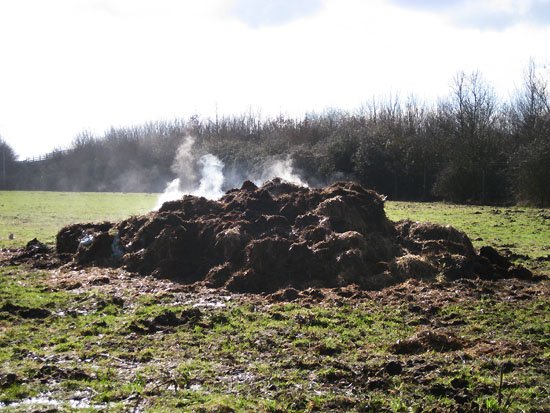
Dungle


Some words seem to have been invented just so that they could be used as names for characters in a Charles Dickens novel, or by children's authors. Such a word is dungle. I can just imagine old Professor Dungle pottering about his library, or Mr and Mrs Dungle being the evil family with whom our orphan-hero is forced to live.

In fact, though, dungle has a precise and clear meaning. It's a verb and it means to throw something onto a dunghill; once there the thing is said to be dungled.

It's worthwhile noticing that a dungled person is liable to end up sharny-faced, which is an old Scottish term for bedaubed with dung.

I'm glad I don't live in Old Scotland. However, I also reckon that I could get away with calling somebody sharny-faced and making it sound like a compliment.

As we're on the subject of dunghills, I cannot but quote John Lyly's lovely lines:

It is the disposition of the thought that altereth the nature of the thing. The sun shineth upon the dunghill and is not corrupted, the diamond lieth in the fire and is not consumed, the crystal toucheth the toad and is not poisoned, the trochilus liveth by the mouth of the crocodile and is not spoiled,

This is all terribly true, however the last clause is a bunch of crap:

a perfect wit is never bewitched with lewdness neither enticed with lasciviousness.

Dungled.