
There's no mention of the
noun
minute anywhere in the Bible.
That's not at all surprising really, because they didn't have clocks. Well, they did have some water clocks; but these weren't common. The point is that if you rang on Jesus' doorbell and asked Him if He could spare ten minutes of His time to talk about Jesus, He wouldn't have known what you meant. Well, he might if he were omniscient, but that's beside the point.
Now minutes did exist back then. It was the ancient Babylonians who started dividing angles up by sixty. If you then do a
second division by sixty you get down to a
second. That's where it comes from, folks,
secunda pars minuta, although St Augustine in his
Mathematici was still calling them
minutae minutarum or
minutes of minutes.
However, these were abstract mathematical and astronomical terms that nobody would have used in everyday life. They wouldn't have been used, because they were useless, because there were no clocks.
You could, of course, divide the day up into rough hours by the position of the sun. So there are hours in the Bible:
Now from the sixth hour there was darkness over all the land unto the ninth hour. And about the ninth hour Jesus cried with a loud voice, saying, Eli, Eli, lama sabachthani? that is to say, My God, my God, why hast thou forsaken me?
But it's probably significant that these references to numbered hours don't pop up until the New Testament, which was written in Greek.
Incidentally, the Romans had twelve hours from dawn till dusk, whatever the season. (
Jesus answered, Are there not twelve hours in the day? If any man walk in the day, he stumbleth not, because he seeth the light of this world.) This meant that at midwinter the hours were shorter during daylight and longer at night. This is not, though, the origin of the phrase the small hours, which are so called just because they have low numbers (one o'clock, two o'clock).
Anyway, there are also no minutes anywhere in the
Canterbury Tales (C14th). Chaucer did know about hours and minutes. He wrote about them in his Treatise on the Astrolabe:
These degres of signes ben everich of hem considered of 60 mynutes, and every mynute of 60 secundes.
But outside of treatises on astrolabes you just wouldn't use these measurements. There were clocks (just) but there weren't that many of them and most people would never have seen one. The hour was still the system of reckoning.

Shakespeare has minutes.
He has 63 of them. That's because there were clocks, usually in churches. As Falstaff says:
The Windsor bell hath struck twelve; the minute draws on.
But though Shakespeare often mentions minutes, I think he does so in the way that I might mention nanoseconds or hemidemisemiquavers. I've heard of nanoseconds, but I'd have to Google them to find out what they actually are. And it takes me a bit of calculation before I can work out that a hemidemisemiquaver is a sixteenth of a crotchet. They're cool-sounding units of measurement that I might refer to without understanding them properly.
Shakespeare almost always mentions minutes in relation to hours:
O God! methinks it were a happy life,
To be no better than a homely swain;
To sit upon a hill, as I do now,
To carve out dials quaintly, point by point,
Thereby to see the minutes how they run,
How many make the hour full complete;
How many hours bring about the day;
How many days will finish up the year;
How many years a mortal man may live.
When this is known, then to divide the times:
So many hours must I tend my flock;
So many hours must I take my rest;
So many hours must I contemplate;
So many hours must I sport myself;
So many days my ewes have been with young;
So many weeks ere the poor fools will ean:
So many years ere I shall shear the fleece:
So minutes, hours, days, months, and years,
Pass'd over to the end they were created,
Would bring white hairs unto a quiet grave.
Now a home-carved sundial won't actually give you accurate measurement of minutes. It's just Shakespeare showing off that he knows the clever word. Shakespeare almost always uses minute in this sort of hour-minute comparison, or just to mean a very short period of time (
better three hours too soon than a minute too late). Unless you were actually in front of the church, time was still measured in the tolling of the bell. I'm pretty sure that if you asked Shakespeare whether he could spare ten minutes of his time, he would look rather puzzled as he tried to make a mental calculation of what that meant.
Shakespeare never mentions ten minues or five minutes. There's only one play where he uses minute to mean anything precise. That's
Midsummer Night's Dream, where Puck says that:
I'll put a girdle round about the earth
In forty minutes.
Which means that Puck can travel at 37,000 mph. Titania also refers to "the third part of a minute", but I don't think that this really shows that Shakespeare knew what he was talking about, any more than I know offhand what a nanosecond is. Twenty seconds is fairy stuff. Shakespeare is just Falstaff, hearing the bell and talking nonsense. If you arranged to meet Shakespeare at twenty to four, he wouldn't be there.
It's the pocket watch that brought the minute and then the second into every day speech. You want to know when they became widely available?
Just click on this lovely little chart I made.
All of this has really been a very long and tedious way round of trying to explain what a miracle it is that we use the phrase
five minutes in such an carefree don't-even-think-about-it manner. For us to know what that means requires all of us to have an intricate device attached to our wrists. With our forty-minute commutes, twenty-minute lunch breaks and meetings at twenty past three, we understand time in a way that was unavailable to people a few hundred years ago.
We
imagine the world in a different way.
As of 1980, English fiction contains more references to minutes than to hours. Clockmakers have changed the language.
I am a sundial and I make a botch
Of what is done much better by a watch.
N.B. It should be noted that throughout this I've been talking about what was generally known and generally available. There have been all sorts of cunning devices for measuring time. I'm only talking about the ones that were widespread enough to influence common discourse. The definition of minutes has also varied. This is not a history of clock-making or astronomy, it's a history of how clock making and astronomy have influenced language and popular conceptions of time.


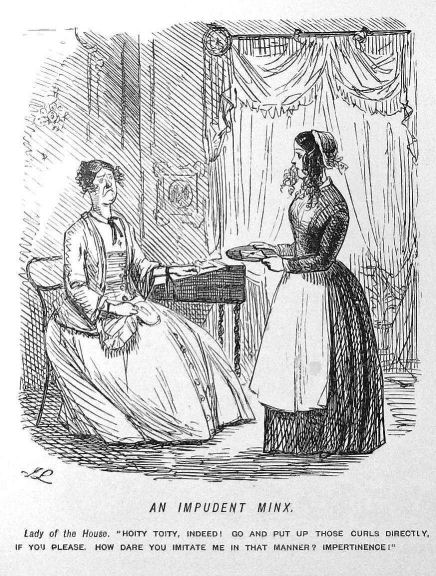 is a lovely word. It means bashful or modest, but it's so much fun to say aloud. "Don't be pudibund, old boy, you've done splendidly." There's even an extra word pudibundery which means prudery, so Ezra Pound could observe that:
 I've been asked to explain the origin of div. That's the British slang term div, meaning idiot. I'm afraid there will be no explanation. Or to be more precise, there'll be many of them.
 I've been reading a fantastic book called Only Beautiful, Please. This is not about the dress code at Inky Fool Mansions, instead it's about life in North Korea*. I was rather struck by a linguistic point that the author makes about the North Korean term for Americans.
 In honour of whatever's going on in the news, here is a link to an etymological map of Europe. You can zoom in and out just by clicking.
 There's no mention of the noun minute anywhere in the Bible.
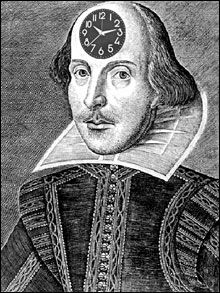 Shakespeare has minutes. He has 63 of them. That's because there were clocks, usually in churches. As Falstaff says:

 Posts
Posts


