
As Auden said,
It is time for the destruction of error.
Since the dear old
Etymologicon came out, I have been fielding occasional e-mails from those who have noticed five mistkaes. It’s the first one that shames me as it is of proper lexicographic significance.
1) In my list of the words and phrases invented by Winston Churchill I for some reason included the term
iron curtain. I’ve no idea why I did this as, though Churchill did make the phrase famous, it had been around since the eighteenth century as a safety device in theatres, and had been used to describe the Soviet border from at least 1920.
Mea culpa, mea culpa, mea maxima culpa.
None of the rest (to my lackadaisical mind) seem to be too serious, but in the interests of full disclosure:
2) I said that beechwood is good for carving because it is soft. However, a correspondent writes:
Beech wood is not soft. Speaking as a former professional cabinet-maker, I can attest with blisters to how soft beech wood is not. Botanically, it's a hardwood as it comes from a deciduous tree, and in practice it is good for the sort of carving you describe as it is reasonably tough, not brittle or splitty (splitty is a perfectly good word in common use amongst woodworkers), but most of all it is a) abundant and therefore cheap; b) of no use in ship-building and therefore available; c) fine-grained, diffuse-porous, not ring porous, and pretty consistently straight grained and therefore takes detail well. Compared to oak, it is not very hard, but compared to other commonly available woods in germany in the middle ages (such as pine and spruce) it is indeed pretty rock-like. My guess would be it was chosen for its consistency, detail-holding, and price characteristics.
3) I said that Thomas Derrick used his invention to execute the Earl of Essex. Derrick did kill Essex, but as the latter was an aristocrat it was done with an axe. A commenter points out:
Essex had the right to have his head chopped off, and Derrick made a complete hash of the job. It took him three strikes before he was able to wave the head about to a great cry of 'God Save the Queen'.
4) I said that the Ancient Greeks used poison arrows. However, I'm told that:
The ancient Greeks did not as a general rule poison their arrows in war. Some of their opponents did, such as the Scythians, so they certainly knew of the practice.
5) I said that outsiders never win horse races, and that favourites always do. A racehorse owner wrote to tell me that this isn’t really the case. The favourite wins about one third of the time. Hundred-to-one shots win slightly less than every hundred races. The remainder is made up by well backed horses who aren’t quite the favourite.
I also made an utterly idiotic passing reference to the Maginot Line, implying that it was a WWI thing, when of course it's WWII. This has already been removed from reprints.
Anyway, all of the above will be tweaked in reprints so that it will look as though I never made the mistakes at all. If anyone else has noteiced an error, do say.

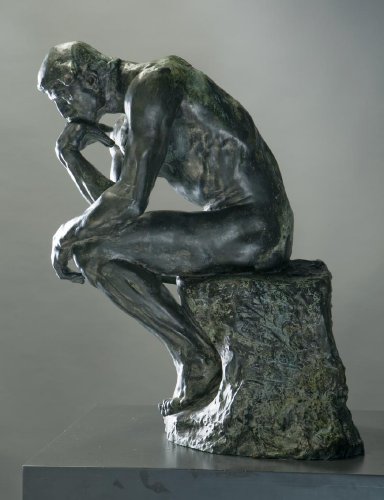 How vainly men themselves amaze adding bits on to their houses - a games room, a gym, a private cinema. If I ever have the money, I shall build myself a phrontistery, or possibly a phrontisterion, they mean the same thing: a place for thinking.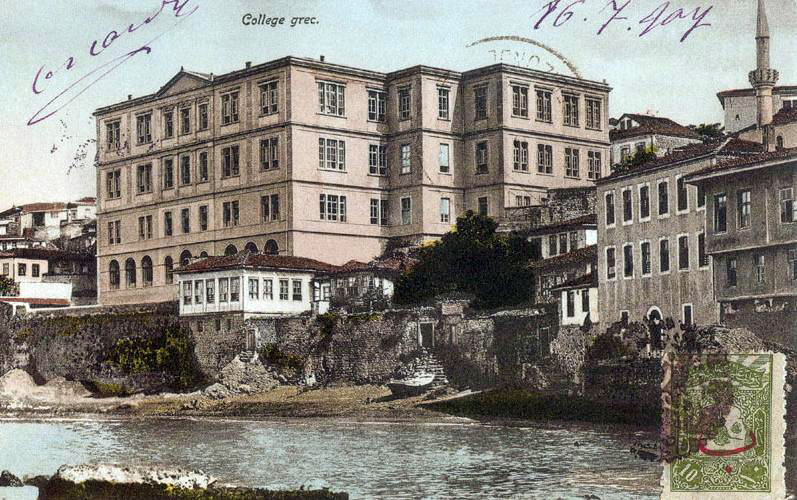


.jpg)


 Posts
Posts


