Showing posts with label Omphalos. Show all posts

Friday, 6 January 2012

Crorections


As Auden said, It is time for the destruction of error.

Since the dear old Etymologicon came out, I have been fielding occasional e-mails from those who have noticed five mistkaes. It’s the first one that shames me as it is of proper lexicographic significance.

1) In my list of the words and phrases invented by Winston Churchill I for some reason included the term iron curtain. I’ve no idea why I did this as, though Churchill did make the phrase famous, it had been around since the eighteenth century as a safety device in theatres, and had been used to describe the Soviet border from at least 1920. Mea culpa, mea culpa, mea maxima culpa.

None of the rest (to my lackadaisical mind) seem to be too serious, but in the interests of full disclosure:

2) I said that beechwood is good for carving because it is soft. However, a correspondent writes:

Beech wood is not soft. Speaking as a former professional cabinet-maker, I can attest with blisters to how soft beech wood is not. Botanically, it's a hardwood as it comes from a deciduous tree, and in practice it is good for the sort of carving you describe as it is reasonably tough, not brittle or splitty (splitty is a perfectly good word in common use amongst woodworkers), but most of all it is a) abundant and therefore cheap; b) of no use in ship-building and therefore available; c) fine-grained, diffuse-porous, not ring porous, and pretty consistently straight grained and therefore takes detail well. Compared to oak, it is not very hard, but compared to other commonly available woods in germany in the middle ages (such as pine and spruce) it is indeed pretty rock-like. My guess would be it was chosen for its consistency, detail-holding, and price characteristics.

3) I said that Thomas Derrick used his invention to execute the Earl of Essex. Derrick did kill Essex, but as the latter was an aristocrat it was done with an axe. A commenter points out:

Essex had the right to have his head chopped off, and Derrick made a complete hash of the job. It took him three strikes before he was able to wave the head about to a great cry of 'God Save the Queen'.

4) I said that the Ancient Greeks used poison arrows. However, I'm told that:

The ancient Greeks did not as a general rule poison their arrows in war. Some of their opponents did, such as the Scythians, so they certainly knew of the practice.


5) I said that outsiders never win horse races, and that favourites always do. A racehorse owner wrote to tell me that this isn’t really the case. The favourite wins about one third of the time. Hundred-to-one shots win slightly less than every hundred races. The remainder is made up by well backed horses who aren’t quite the favourite.

I also made an utterly idiotic passing reference to the Maginot Line, implying that it was a WWI thing, when of course it's WWII. This has already been removed from reprints.


Anyway, all of the above will be tweaked in reprints so that it will look as though I never made the mistakes at all. If anyone else has noteiced an error, do say.

Thursday, 22 December 2011

A Pair of Links


There's a little piece by me in today's Scotsman, which you can read upon line by clicking on this link. It's all about the origins of Christmassy words like satsuma and advent, and explains why Xmas is the original spelling.

The reading of The Etymologicon continues on Radio 4, and today's episode can be heard by following this link. It's being read so well that my litel bok has found itself, like a stage-frightened actor shoved from wings to spotlight, number one on the Amazon bestseller lists. This has, I'm afraid, resulted in pot-fury followed by ale-passion.

Wednesday, 14 December 2011

Vainglory, Hubris &c


Yes, I know you're bored with my wittering on about The Etymologicon. You've been reading this web-log for eons and you wish I'd just get back to a post a day. But you must remember that this is my baby, my masterpiece, my pride, my hope and my joy. And I want you to buy at least fifty copies each. So, as my ego is as frangible as it is vast, here's a little round-up of what the press have been saying about my baby.

First off, The Etymologicon is going to be Radio 4's Book of the Week next week. Every weekday morning at a quarter to ten Hugh Dennis will be reading extracts to an expectant nation, and the whole thing will be repeated at half midnight and be available on the Listen Again thingummyjig. This is also the Radio Times' number one radio choice for Christmas.

Anyway, to the papers:

"But this year's must-have stocking filler – the angel on the top of the tree, the satsuma in the sock, the threepenny bit in the plum pudding, the essential addition to the library in the smallest room – is Mark Forsyth's The Etymologicon"  - Ian Sansom in The Guardian

"I'm hooked on Forsyth's book ... Crikey, but this is addictive" - Mathew Parris in The Times (who also made it one of his books of the year).

"The stocking filler of the season... How else to describe a book that explains the connection between Dom Pérignon and Mein Kampf?" - Robert McCrum in The Observer

"The snappy section lengths and the perky writing style, plus the comely jacket-less cover, makes this prime fare for the Christmas market. You can read it through at a sitting or two, or dip in as fancy takes. A perfect bit of stocking-filler for the bookish member of the family, or just a cracking all-year-round read. Highly recommended." - Matthew Richardson in The Spectator

"Kudos should go to Mark Forsyth, then, author of The Etymologicon, who has tried to sort out this linguistic mare’s nest and help us see the wood for the trees. Clearly a man who knows his onions, Mr Forsyth must have worked 19 to the dozen, spotting red herrings and unravelling inkhorn terms, to bestow this boon – a work of the first water, to coin a phrase." - The Sunday Telegraph

And then there's all the lovely ones from around the web that I shall bore you with some other time. For the moment, I shall be available for signing and the like at Waterstones Covent Garden tomorrow (Thursday) night.

And if you want a useful word to describe this post you can choose between omphaloskepsis and quomodocunquizing.

He shall be me, or vice versa

Thursday, 8 December 2011

Fewtrils and Fattrels


Fewtrils and fattrels are little things of no value, like this blog-post. They are toys and trifles, mere baubles. The words may therefore be useful for those of you sending Christmas presents, as in "These few festive fattrels I found for you."

That's all for today as I'm horribly busy, but for those of you of a North-West-Londoney disposition I'm doing a reading and book-signing of The Etymologicon at West End Lane Books in West Hampstead tonight at seven-thirty. And, for those of you who get up early, my career as a radio-strumpet* continues apace and I'll be on the Today Programme tomorrow sometime between seven and seven-thirty in the morning.
*I dislike the term media-whore.

Tuesday, 15 November 2011

Waterstones, #inkf, and Piddle


Once upon a time there was a village in Dorset called Piddle. Or, more precisely, it was listed in 1212 as being called Pidela Walteri, which is Latin for Walter's Piddle. Piddle just meant lowland and Walter was, one assumes, the landowner.

Anyway, for some reason lost in the mists of medieval time, the Piddle got dropped and the Walter remained. In fact, it started to be called Walter's Farm, or in old English Walter's ton. Then people stopped pronouncing the L in Walter and it just became Water's ton. The important thing was that the people who lived there acquired the surname Waterstone. They had sex and had children who had sex and had children in a long, frenzied line of lust and procreation that led inevitably to the birth of Tim Waterstone in 1939. And his name had nothing to do with either water or stone.

Tim Waterstone founded Waterstones bookshops in 1981 and they are now the largest chain of bookshops in Britain. Then all it took was for me to write The Etymologicon and the lovely people at Waterstones to read and like it and a plan was formed. Essentially, I'm spending the day doing a word surgery. The idea is that you tweet a word to me with the hashtag #inkf and I'll do my best to tweet back with an explanation. Try to include @inkyfool and @waterstones.

It could all have been very different, though. If that Dorset village had dropped the other half of its name I would be teaming up with Piddles.

This is Wyre Piddle in Worcestershire, which I've actually visited.

Monday, 14 November 2011

#inkf


Tomorrow, I'm going to be doing a word surgery in conjunction with the lovely people at Waterstones. The idea is that you can go onto Twitter and tweet at me asking questions about etymology and philology and anything at all to do with words. I will tweet back to the best of my ability and thus the day will run in a spirit of joyous logopandocie. All you need to do is tweet with the hashtag #inkf.

And just to prove that I'm not making this up, have a look at Waterstones' Twitter page, it's a thing of beauty.

Thursday, 3 November 2011

Go, Litel Bok


It's out! The Etymologicon is in bookshops today. It is published (etymologically made public, and therefore related to pubs). I scampered up to the Waterstones on Islington Green and there it was on the table, lying alluringly next to The Gashlycrumb Tinies.

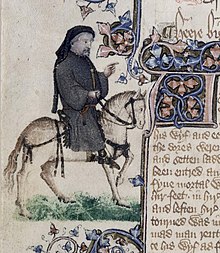
I feel like a proud father who has finally managed to clone himself in book form. At the end of Troilus and Criseyde, Chaucer says goodbye to his book:

Go, litel bok, go, litel myn tragedie...

And then he adds that:

And for there is so great diversity
In English and in writing of our tongue,
So pray I God that non miswrite thee,
Nor thee mis-metre for default of tongue;
And read where-so thou be, or else sung,
That thou be understood, God I beseech!

I rather like the idea of people singing The Etymologicon. In fact, I shall insist on it as a condition of sale. So, if you don't want to have to demonstrate a good voice and a mastery of the harp, you should run out and get a copy today.

By the way, for the Londoners among you, The Londonist website has a thing up today on me and the etymology of Tube stations. It can be found by clicking on this link.

Go, litel bok.

Wednesday, 2 November 2011

A Widget


Look what the clever fellows at Icon Books have done. Do you see it? Just to the right of this sentence? In the right hand column? That's a widget and if you click on it you get to read the opening twenty pages or so of my brand new, shiny, beautiful, lovely, osculable book: The Etymologicon, which is available in all good bookshops (and some evil ones) on Thursday.

No. This is.

Thursday, 27 October 2011

Twinters, Bidents and Conundrum-Makers


A twinter is a two-year-old cow. It's a dialect term that is a shortening of two-winters. A two-year-old sheep, on the other hand, is called a bident. A bident is one short of a trident, which is three-toothed fork. The idea is that after two years a sheep, apparently, has two rows of teeth and is therefore ready to be sacrificed. This causes me concern as today is, in a way, my second birthday. I am a twinter and bident.

Inky Fool is two years old today. The earth has completed its weary journey around the sun twice since first I posted on the subject of branding. And just to emphasise the pointlessness of it all, the planet is now back where it started.

Inky Fool, though, is not. Inky Fool has gained many lovely readers, such as you*. Moreover, Inky Fool has a book - The Etymologicon - that will be coming out in a week's time and is already available on Kindle.

And as it is my blog-birthday, I shall simply quote the following for no reason other than the fact that I like it. It's from Dialogues of Dead (1699) by William King.

Hesychius. Why so they are! But can there be more Wit than in an Etymology, of which you are full from all Languages?


Gouldman. Etymologies may indeed furnish Materials for Quiblers, Punsters, and Conundrum-Makers, but these sorts of Wit are as much out of use as hammer'd Money.

Finally, I should apologise. There was no post yesterday. I thought there was. I wrote one and I believed that I had clicked on PUBLISH POST. Mind you, I'll believe anything.

The birthday party


*Well, I assume you're lovely. Are you? Answers in the comments, please.

Sunday, 23 October 2011

The Telegraph


File:TĂ©lĂ©graphe Chappe 1.jpgSome words pop up long before you think they would. The periodical Nature mentioned a marvellous maze of internetted connections in 1883. Computers have been employed since 1613 (when they were people who computed). The telegraph has been around since 1794. It was invented by a French chap called Claude Chappe and it consisted of wooden posts that could be moved around and thus form a distant vision or, in Greek, a tele-graph.

All of which is a long way round of saying that today's Sunday Telegraph (available at all good agents of news) has two lovely articles about Inky Fool and the book The Etymologicon: a leader that can be read here, and an article that is behind this link. In the papery version of the paper (from Greek papyrus) they can be found on pages 13 and 27.

This makes me inordinately and exorbitantly proud.

File:Chappe semaphore.jpg
The Inky Fool could not afford a mobile phone.

Tuesday, 11 October 2011

Advance Copies of the Etymologicon from Waterstones


The enchanting people at Waterstones are giving away a few advance copies of my book, The Etymologicon, on Facebook. To be in with a chance just follow this link.

The Etymologicon, in case you didn't know, is all about the strange etymological connections between words. So if you vitally need to know what testicles have to do with testaments, why all dogs are cynical, or how barristas connect to barristers, The Etymologicon is the tome for you.

It's here and it's shiny, and it's in the shops from November the third.

Friday, 30 September 2011

Twenty [One] Books on Language


A lady asked me to post a link to her list of the twenty best books on language. So here it is, and a very interesting list it seems too. However, there is one glaring omission that renders it utterly obsolete - it doesn't include this blog's book The Etymologicon.

The mere fact that The Etymologicon doesn't actually come out until November the third does not excuse this. November 3rd is only a few weeks away; and, anyway, you can already pre-order it with FREE SHIPPING TO ANYWHERE IN THE WORLD from this website, and that's with a 25% reduction.

And how else are you ever going to find out about the etymological connection between film buffs and buffaloes, or find Mick Jagger's use on a lawn? No how - that's how. No how.

Did I mention the free shipping? Did I? I did? I mentioned the free shipping. Good. Then your Christmas shopping is solved by FOLLOWING THIS LINK.

Gold foil on crimson cloth.
It's all too beautiful.

Friday, 2 September 2011

Egotheists and Interviews


One up from an egotist is an egomaniac. One up from an egomaniac is an egotheist, which the OED defines as the (mystical) identification of oneself with the Deity. One up from an egotheist is a blogger who posts a link to a magazine article about himself.

That's me.

Me. Me. Me. Me. Me.

You see, The Bookseller magazine did an interview with me because of the my book, The Etymologicon, which is coming out in November (but you can order it now). So if you're as obsessed with me as I am, click on this link. I do lots of explaining of funny words and the like and the interviewer was quite unnecessarily nice about me.

I should also mention that the OED says of the word interview:

In early times, esp. a formal or ceremonial meeting of princes or great persons

Me. Me. Me. Me. Me!


Friday, 26 August 2011

The Etymologicon


Ladies and gentlemen, I give unto you Inky Fool - The Book! The Etymologicon!

Yes, our little blog will finally be available in bookshops all over the English speaking world so that you, dear reader, so that you can brandish it and cherish it and use to intimidate your friends or prop up an unstable table. We shall emerge from our furtive Internet cave into the bright sunshine of ink and paper.

For months I have been beavering away on The Etymologicon - A Circular Stroll Through the Hidden Connections of the English Language. All my finest fancies and most recondite research has been held back and stored up in a beautiful, beautiful book.

So, though I say that the blog's become a book, it's almost all new stuff with occasional posts woven into the weft and woof.
Basically, it's about the links between words and phrases that you never knew about: the etymological connection between the Rolling Stones and Elizabethan horticulture or between California and the Caliphate. It's like this blog, but you can give it as a Christmas present.

It will be coming out in Britain from Icon Books, in North America from Corinthian and from somebody else in Australasia, and I think even India (although I must do some more research). Moreover, it has a beautiful red cloth cover and the title is in gold and it is, in short, the most beautiful thing that has ever been devised by man, beast or deity.

It's released on November the third just in time for all your Christmas shopping, but you can (and will) pre-order it now. It's on Amazon. Just click this link.

And, in case you were wondering, an etymologicon is a book that contains etymologies, as in Milton's line:

So that they who are so exact for the letter shall be dealt with by the Lexicon, and the Etymologicon too if they please...

Just because it's so damned beautiful.

Wednesday, 3 August 2011

Eh?


Regular readers of this blog will know that I'm something of a word-chap. I've read Ulysses three times, and enjoyed it, which is more than can be said for James Joyce's wife who only made it to page 26.

However, I am currently involved in the attempted purchase of a piece of property. This means that I have to read over a million billion documents written in legalese. For example, this sentence, which I have not made up:

There are excepted from the effect of registration all estates, rights, interests, powers and remedies arising upon, or by reason of, any dealing made in breach of the prohibition or restriction against dealings therewith inter vivos contained in the Lease.

If any reader can tell me what that means, or even hazard a guess, I would be greatly grateful.

(Inter vivos means not in a will)

Me

Tuesday, 7 June 2011

Everything Must Change So That Everything Can Remain The Same


Update: It may have worked.

So said Giuseppe di Lampedusa in The Leopard, which is, incidentally, one of the greatest novels ever written.

This comment on the politics of the Italian Risorgimento sprang to my mind because, in a fit of opulence, I have bought the domain name inkyfool.com and I'm going to switch over to it. Today.

My plan is that everything will redirect and that bookmarks won't need to be changed and that everything will remain the same. My crack team of technical staff assured me over a pint the other night that it would all be fine, but that may be because my crack team of technical staff is an optimistic fellow who does much of his technical cracking via a phone from a bar in West Hampstead.

Anyway, if all goes well, Lampedusa will be proved right and I'll write a nice new post on Kubla Khan later. In fact, we might have a week of posts on Kubla Khan. Hmmm. Yep. That or I'll be sobbing into a computer.


So far as I'm concerned, this is what the Internet really looks like.

Sunday, 30 January 2011

The Book of Faces


Right, the Inky Fool is now on Facebook, and socially networking and all that sort of electronically-amicable jazz. If I've got this right (and the good Lord knows that I may not) you can now like the Inky Fool, and then all the latest arcana and erudition will show up in your news feed, which must be lovely.

Just go to the book of faces and search for Inky Fool, or follow this link (which may work).

In the meantime, I shall tell you that the side of a book directly opposite the spine is called, by bookbinders, the face; and that face comes from the same Latin source as superficial.

Wednesday, 27 October 2010

An Omphalic Post


First off, an omphalos is a belly-button. So an omphalic post is a navel-gazing one. I would coin the word omphaloptic, but some blighter got there before me and the word means a lens that is convex on both sides. The correct term is omphaloskepsis: contemplation of the belly-button.

The reason for this umbilical fixation is that the Inky Fool is a year old today. It is 365 days since I wrote about branding (although I'm no longer sure of the fabulous fact I appended). Since then 423 posts have sprung, whimpering and forlorn, into the Blogosphere.

Since you ask (you do ask, don't you, dear reader?) here are my favourite twelve posts of the last year.

Data, Singulars and Plurals
Estate Agent's Dictionary
Gormless, Feckless, Ruthless and Reckless
Lionized Lions (and Lionel Singh)
Wamblecropt
Join The Majority
The Drunken, Addled, Insane Parliament of Bats and Dunces
Prepositions The End Of Sentences At
Ruelle
Snarling Snobs and Sniggering Sneaks
The Most Quoted Lines of Poetry: Now With Added Graphs!
Parenthetical Codpieces

I should thank all those who have put up links, or posted Inky Fool to Facebook, or e-mailed their friends or twittered or tweeted or otherwise done their bit to insinuate the Inky Fool into a surly and unforgiving world. If you've never e-mailed it to a friend, do so now.

Those who link here, are linked back to, and I thoroughly recommend trying all the lovely blogs that are listed down the right hand side of this page. Thank you to the Antipodean for telling me my typos. And thank you, dear reader, thank you for gazing down into my abyss. I don't know who you are, but I love you anyway.

In fact, I do know something about you. Due to the delights of Statcounter I can find out what words you googled in order to get here and the name of your server. It is a source of immeasurable pride to me that this blog spent a long time as first result if you did a Google-blog-search for donkeysex.

What little I get from Statcounter makes me confused, and rather curious. I see the same people coming back and I grow fond of them, by which I mean you.

So to the reader who keeps googling Who is the Inky Fool, just click on the contributors button on the right.

To the regular reader in the United States Senate, there's another regular reader in the House of Representatives. You should hook up.

To the readers on the House of Commons server, get back to work.

To the private detective in North Carolina, I'm innocent, I tell you.

To the other reader in Raleigh, NC, there's a private detective who keeps logging on just after you.

To the reader at Macmillan Publishers, give me a damned book deal.

And to the reader who got here searching for inky sex, come back!

Adam and Eve did not have belly buttons

Monday, 5 July 2010

Holy-Days


I am off on holy-day. However, this should not affect the blog too much. I have prepared a posy of posts already. Tomorrow's offering will appear in splendid automation at ten sharp, even as I am riding the funicular railway to my time-share bungalow on the summit of Mount Abora.

However, as there are bound to be gaps I would thoroughly recommend that you rush over and visit How To Write Badly Well.

I'll have some Internet access but will, necessarily, be far slower in replying to interesting, indignant or importunate comments and queries.

The Inky Fool was late for his flight

P.S. If anybody knows of somewhere unbelievably cheap to stay in Paris on the 20th, it would stop me going inseine.