Wednesday, 16 January 2013

Sottisier


A sottisier is a collection of foolish or stupid remarks. I may need to rename this blog.

The word comes from the French, but was imported into the English language like good brie by Ezra Pound in a letter of 1929. Pound advised Charles Henri Ford to include a sottisier in his new poetry magazine (everybody Pound knew seemed to run magazines). Here's the relevant moment:


You shd. look at all the other poetry reviews and attack idiocy when it appears in them. The simplest and briefest form of attack is by a sottisier. As has been done by Mercure de France, New Age, Egoist and Am. Mercury. The only thing is that instead of Mencken's 'Americana' you shd. run sottisier confined to literary criticism. It is no longer my place to point out the idiocies that appear in Poetry, for example. The older boy shd. not stick pins into the younger. It is courageous of the young to stick pins into 
the pompous. 

Make your sottisier from Poetry and the main literary reviews, Sunday supplements, etc. 

These sottisiers are often the first parts of a live mag that people read. Let everyone collect 'em. 

There are very few (deliberate) sottisiers today. Private Eye has a few of them in Colemanballs and Pseuds Corner. However, the comments section of most political websites keep the tradition well and alive.

Available in all good bookshops


Monday, 14 January 2013

Job Application


Once upon a time (1910-89), there was a chap called Robert Pirosh. He was an American chap and in 1934 he decided that he wanted to become a screenwriter. So he went to Hollywood and sent the following application letter to all the studios. Needless to say, he got a job, and later won an Oscar.

Probably the most famous films he worked on were Night at the Opera and Day at the Races. 


Dear Sir:

I like words. I like fat buttery words, such as ooze, turpitude, glutinous, toady. I like solemn, angular, creaky words, such as straitlaced, cantankerous, pecunious, valedictory. I like spurious, black-is-white words, such as mortician, liquidate, tonsorial, demi-monde. I like suave "V" words, such as Svengali, svelte, bravura, verve. I like crunchy, brittle, crackly words, such as splinter, grapple, jostle, crusty. I like sullen, crabbed, scowling words, such as skulk, glower, scabby, churl. I like Oh-Heavens, my-gracious, land's-sake words, such as tricksy, tucker, genteel, horrid. I like elegant, flowery words, such as estivate, peregrinate, elysium, halcyon. I like wormy, squirmy, mealy words, such as crawl, blubber, squeal, drip. I like sniggly, chuckling words, such as cowlick, gurgle, bubble and burp.

I like the word screenwriter better than copywriter, so I decided to quit my job in a New York advertising agency and try my luck in Hollywood, but before taking the plunge I went to Europe for a year of study, contemplation and horsing around.

I have just returned and I still like words.

May I have a few with you?

Robert Pirosh
385 Madison Avenue
Room 610
New York
Eldorado 5-6024


Friday, 11 January 2013

Ayoni


I was reading this fascinating interview with Damian O'Brien about his new book If Houses, Why Not Mouses? In it, he mentions that ancient Sanskrit had the word ayoni which means (and I've checked this up) anywhere other than the vagina.

The usefulness of this word should be self-evident. But I'm particularly proud that I've managed to work it into conversation twice this week. You see, if you say it dismissively and with a wave of the hand, it kind of does mean anywhere other than the vagina.

Where shall I put my umbrella?

Ayoni.

But I've no idea whether I'm pronouncing it correctly.

Wednesday, 9 January 2013

Metro and Annoying Words


I'm too lazy to post today. But you can always have a look at this article in Monday's Metro which has various contributions from myself. It's on the world's most annoying words.

Friday, 4 January 2013

Terriers


A friend of mine pointed out recently that a terrier is so called simply because it chases animals into the burrows in the earth or terre (or terrain). It is an earth dog - in roughly the same way that poodles were once pudelhunds in German, or water dogs, or in English puddle-hounds.

If you have two terriers bred for fighting that can be pitted against each other, they are pit-bull terriers. And there really was a Jack Russell. He was a parson who, while at university, bought a white terrier with dark tips to its ears from a milkman.

A terrier's feet are, etymologically, subterranean.

Not him.

Wednesday, 2 January 2013

Resolutions


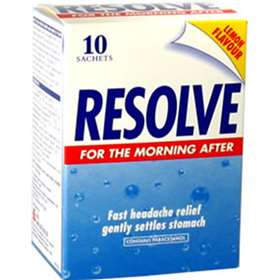
It is a source of constant New Year's shame to me that my computer screen has more resolution than I do. Mysteries are more often resolved than I am.

If you solve something, you get a solution. That's because of the Latin word solvere, which meant to loosen or dissolve. So, if you have a knotty mathematical problem, you loosen it - or solve it - and thus get the solution. If you put a sugar lump in hot water it dissolves and you are left with a solution containing sugar.

Re- usually means to do something again, but it can just be an intensive prefix, a bit like super-. Thus, resolution arrived in the English language as a chemical term meaning:

The reduction or separation of an object or substance into constituent parts or elements; decomposition, disintegration, dispersion. Formerly also: †a material result of this, spec. a smoke or vapour (obs.). Now rare. [OED]

Now, imagine looking at a distant nebula or galaxy. To the nude eye, the Milky Way looks rather like a milky way running across the night sky. But if you look at it with a telescope this long smudge is broken up into lots of little stars. It is, like a chemical, resolved. The telescope thus gives you a resolution. And better telescopes have higher resolutions. Similarly, your digital camera breaks up, or resolves, a picture into lots of little pixels. The number of pixels representing the resolution.

But the New Year's resolution? Well, that seems to come from the idea of resolving a mystery. Once you've broken something down into its parts, resolution has been achieved. Thus you might resolve a mathematical puzzle. This transfers easily to the idea that your doubts and confusions have been resolved. This transfers nicely to the idea that you are no longer baffled and have now made a decision. You are resolute. You have (and the dread phrase isn't recorded until 1850) a New Year's resolution.

Mine is to be dissolute.