Friday, 30 September 2011

Twenty [One] Books on Language


A lady asked me to post a link to her list of the twenty best books on language. So here it is, and a very interesting list it seems too. However, there is one glaring omission that renders it utterly obsolete - it doesn't include this blog's book The Etymologicon.

The mere fact that The Etymologicon doesn't actually come out until November the third does not excuse this. November 3rd is only a few weeks away; and, anyway, you can already pre-order it with FREE SHIPPING TO ANYWHERE IN THE WORLD from this website, and that's with a 25% reduction.

And how else are you ever going to find out about the etymological connection between film buffs and buffaloes, or find Mick Jagger's use on a lawn? No how - that's how. No how.

Did I mention the free shipping? Did I? I did? I mentioned the free shipping. Good. Then your Christmas shopping is solved by FOLLOWING THIS LINK.

Gold foil on crimson cloth.
It's all too beautiful.

Thursday, 29 September 2011

Umbrellas and Bumbershoots


It's a funny thought for an Englishman that the etymological purpose of an umbrella is to keep the sun off you. Umbrella comes from the Latin umbra, or shade, so an umbrella is a little shade, just as a parasol is a protector-against-the-sun, just as a parachute is a protector-against-falling.

An eldritch combination of the above words is bumbershoot - which is an American slang term for an umbrella and an utterly lovely word to say. Basically, if you mess up the word umbrella you're as likely as not to get something along the lines of brolly or bumber. Then, if you notice that an umbrella looks a bit like a parachute you can add the chute onto the end and get bumbershoot, which first appeared in 1896.

The OED has bumbershoot down as originally and chiefly US. However, I intend to import it the moment that the Indian Summer currently hanging over London perishes in October's icy grip.

Damned sunburn

Wednesday, 28 September 2011

Anglophone Saxophones


The English-speaking world is anglophone because England (or Angle-land) is named after the Angles who invaded along with the Saxons when the ages were Very Dark Indeed. But what of the poor dear Saxons? Why didn't they get a phone?

Well, they sort of did. You see, the surname Sax or Saxe means Saxon, and does all across northwest Europe. So Adolphe Sax (1814-1894) must have come by a straight male line of descent from a Saxon. So when he patented the saxophone in 1846, the anglophone world was finally reunited with its etymological twin.

Anglophone and saxophone.

Tuesday, 27 September 2011

Hanging Out with Pickwick


There's a strange feeling that you get when you're reading an old novel and find what you thought was a new phrase. Take, for example, hanging out. It's a phrase that I would have imagined was invented by surfers in the 1960s. So when you come across it in Dickens' Pickwick Papers from 1837 it feels decidedly odd:

Mr. Bob Sawyer, thrusting his forefinger between two of Mr. Pickwick's ribs, and thereby displaying his native drollery, and his knowledge of the anatomy of the human frame, at one and the same time, inquired—


'I say, old boy, where do you hang out?' Mr. Pickwick replied that he was at present suspended at the George and Vulture.

Not only was the phrase around, but it was familiar and annoying enough to be parodied. In fact, hang out comes from the idea of hanging out a sign to show that you're there for business. The same thing once struck me when I was reading Great Expectations. Wemmick is miserable and tells Pip:

"It's a bad job," said Wemmick, scratching his head, "and I assure you I haven't been so cut up for a long time."

Pickwick Papers also contains a character called Mr Phunky, which may be a forerunner of our more modern term. It was only eight years later, in 1845, that a writer called Samuel Naylor was able to pen the immortal line:

I do feel somewhat funky.

Anyway, here's a recording of an interview with Mr Pickwick.

Monday, 26 September 2011

The Esquivalient Cartographer


Many moons ago, I wondered whether there was a lexicographic equivalent of a cartographer's folly. Basically, mapmakers put tiny mistakes into their maps so that they can prove that a rival has simply copied from them. So I was wondering whether dictionaries did the same thing. And it turns out that they do.

The New Oxford American Dictionary apparently included the word esquivalience as just such a copyright trap. The entry ran:

Esquivalience—n. the willful avoidance of one’s official responsibilities ... late 19th cent.; perhaps from the French esquiver, ‘dodge, slink away.’

Which is rather appropriate. The trick worked as well. Dictionary.com included the word and credited it to their paper-sister publication Webster's New Millennium Dictionary of English. So the lexicographer's folly exists. Dictionary.com have since removed the word.

Mind you, I think esquivalient is rather a beautiful word, and intend to use it for every workshy lollygagger I come across.

Of course, in some ways, Blackadder got there first with his contrafibularities.


American readers should now recognise Hugh Laurie.

P.S. This article also has a nice bit about Mountweazels.

Friday, 23 September 2011

Apocolocyntosis


Last night I was sending a text message in which I happened to use the word apocolocyntosis. I was shocked to discover that apocolocyntosis isn't in my phone's dictionary, but even more shocked when the lady I was texting replied that she didn't know what apocolocyntosis meant. Barbarians and heathens! I live among barbarians and heathens.

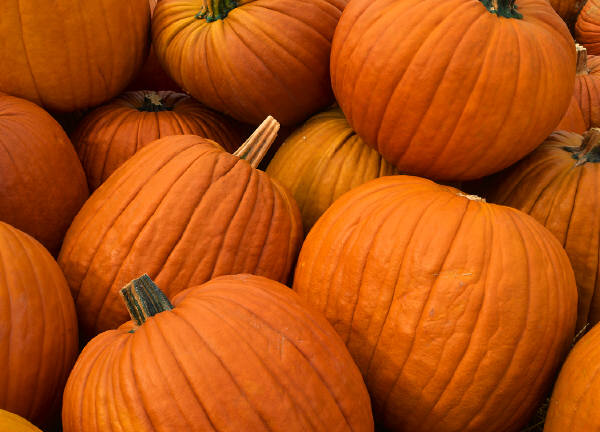
Apocolocyntosis is, of course, the act of being turned into a pumpkin, or pumpkinification if you like. Now, I'll admit that it's not that useful a word when you're not talking about Cinderella; but, when you are, it's invaluable.

It's also a nice, single, concise word if, for example, a loved one were turned suddenly into a pumpkin and you had to call the emergency services.

The origin of the word has nothing to do with Cinderella. It was the title of a satire by Seneca the Younger. When Roman Emperors died they used to go through an apotheosis, which is when you become a god. So Seneca wrote a satire about how when Claudius died the gods wouldn't have him and he was instead sent to hell. Seneca describes Claudius' deathbed thus:

The last words [Claudius] was heard to speak in this world were these. When he had made a great noise with that end of him which talked easiest, he cried out, "Oh dear, oh dear! I think I have made a mess of myself." Whether he did or no, I cannot say, but certain it is he always did make a mess of everything.

At Claudius' funeral procession they chant this:
Mourn, mourn, pettifoggers, ye venal crew,
And you, minor poets, woe, woe is to you!
And you above all, who get rich quick
By the rattle of dice and the three card trick.

And as I'm a pettifogging minor poet who can actually do the three card trick, I find these lines unutterably tragic.

The Emperor Claudius

P.S. Just to be precise the name Apocolocyntosis was ascribed to Seneca's satire (probably) by Cassius Dio.

Thursday, 22 September 2011

An Actual Oubliette


I had often heard and used the word oubliette, but until a couple of weeks ago I had never actually seen one.

An oubliette is a dungeon with an entrance (usually in the ceiling) but no exit. If you meet a chap you don't like, you can throw him into an oubliette and then forget about him entirely. The French for forget is oublier, hence the name.

Of course, despite the rumours, I don't own an actual dungeon, but the word is so useful as a metaphor that I use it regularly. I've even used the word on this blog here and here. The OED mentions that oubliette is almost always used figuratively. Then, on holiday, I was visiting the castle of Najac and saw this sign:


A ladre, by the way, is a miser. So the sign says Tower of the Misers, Ancient Oubliette. And next to the sign was a door (apologies for the quality of the photos, I had only my phone).


And here is the best photograph I could take of the interior of the metaphor.


It only remains to mention that I also visited Albi, which is the town after which the Albigensian Heresy was named, although it's better known as Catharism, which means purity. Catharism is very important in the history of buggery as I explained in this old post.