Friday, 18 November 2011

Tintiddle


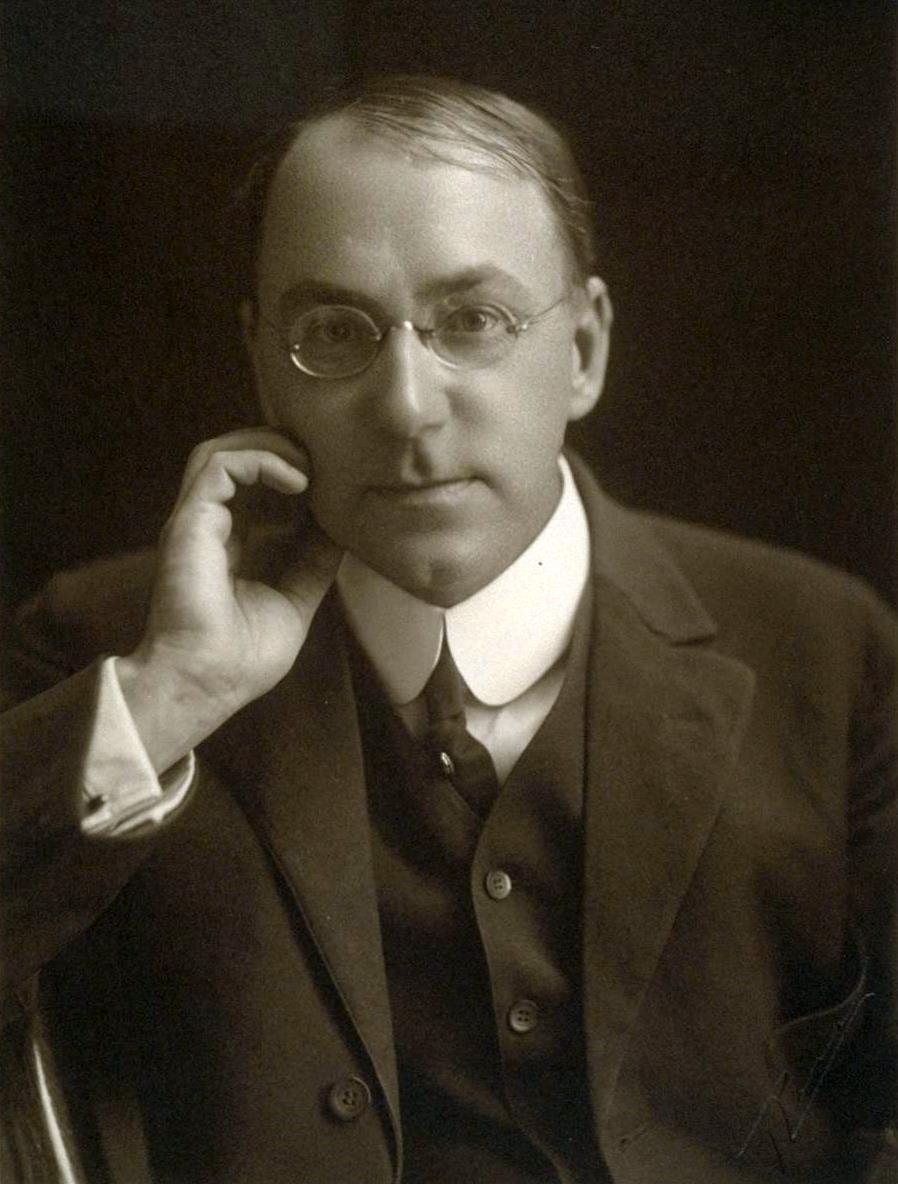
File:Gelett Burgess.jpgSome words catch on, and some words need a helping hand. Gelett Burgess, who was a writer and humourist and artist etc etc, invented the word blurb, which we all know and dislike, but he also came up with tintiddle.

Tintiddle is an English equivalent for esprit d'escalier, or wit that comes too late. It is the perfect comeback that you think of five minutes after the event when, in the French, you are already shuffling forlornly down the stairs. It's also an utterly beautiful word and I intend to revive it, although I fear that, lethologically, I will always remember it too late.

And you, sir, are an ass.

Thursday, 17 November 2011

Queer Carey Street


Those of you who follow the news (and, as Evelyn Waugh said, News is what a chap who doesn't care much about anything wants to read. And it's only news until he's read it. After that it's dead.) will, likely as not, have come across the fabulous outrage occasioned by Robert Peston referring to insolvency as "Queer Street".* This has led to lots of people talking about the etymology of the phrase. So I shall throw my proverbial hat into the lexicographic ring.

Queer Street first pops up at the beginning of the nineteenth century and is defined in Grose's Dictionary of the Vulgar Tongue as:

Wrong. Improper. Contrary to one's wish. It is queer street, a cant phrase, to signify that it is wrong or different to our wish.

However, by the mid-nineteenth century it had come to mean broke, insolvent, penurious and heading for bankruptcy. I would take a guess that this shift in meaning comes down to the Bankruptcy Court which was established on Carey Street in London in the early 1840s. There was certainly a phrase, listed in the OED and Brewers of "being on Carey Street" meaning that you were heading for bankruptcy. The OED doesn't record this phrase until the 1920s, but I just found this description of an artist's predicament from the 1880s:

For the moment, he keenly felt the disgusting cramped situation of Carey Street, which compelled him to peep at his objects, through the rails of his apartment : for the moment, also, he felt the immediate necessity of procuring the gold talismanic key to give him once more liberty, again to wander amidst the beauties of nature : it was then that MORLAND painted for money...

And if I can backdate the phrase forty years, somebody else ought to be able to take it further.
So I shall stick my neck out and make a claim for convergence. An existing term, Queer Street, became an alternative name for the site of the new Bankruptcy Court, Carey Street. All of which allows me to use this photograph.

It's a rich man's world, but a poor man's heaven.


*Phew, what a jormungandrian sentence.
P.S. Photographic credits to The Antipodean.

Wednesday, 16 November 2011

Crimean Clothes


As a little follow up to Monday's post on The Charge of the Light Brigade, it's quite astonishing how many clothes are associated with that single military encounter. The basic shape of the disastrous charge was this: Lord Raglan sent an order to Lord Cardigan who got the order rather muddled and set off on the most famous and most foolish charge of the Battle of Balaclava.

Now, Lord Raglan had lost an arm in the Battle of Waterloo and therefore had his coats specially tailored so that the sleeve was sewn on in a line from armpit to neck, rather than out to the corner of the shoulder. This style is known to this day as the Raglan Sleeve.

Lord Cardigan liked wearing button-up jumpers. These are known to this day as cardigans.

Balaclava is a cold sort of place in winter (the charge took place at the end of October) and so the British soldiers kept warm with knitted woollen coverings for their whole heads, which became known as Balaclava caps and then just as balaclavas: a style now favoured by skiers and terrorists.

Incidentally, Lord Raglan lost his arm at Waterloo where he was aide-de-camp to the Duke of Wellington, after whom the boots.

The rider is Cardigan, the horse is a jumper.

Tuesday, 15 November 2011

Waterstones, #inkf, and Piddle


Once upon a time there was a village in Dorset called Piddle. Or, more precisely, it was listed in 1212 as being called Pidela Walteri, which is Latin for Walter's Piddle. Piddle just meant lowland and Walter was, one assumes, the landowner.

Anyway, for some reason lost in the mists of medieval time, the Piddle got dropped and the Walter remained. In fact, it started to be called Walter's Farm, or in old English Walter's ton. Then people stopped pronouncing the L in Walter and it just became Water's ton. The important thing was that the people who lived there acquired the surname Waterstone. They had sex and had children who had sex and had children in a long, frenzied line of lust and procreation that led inevitably to the birth of Tim Waterstone in 1939. And his name had nothing to do with either water or stone.

Tim Waterstone founded Waterstones bookshops in 1981 and they are now the largest chain of bookshops in Britain. Then all it took was for me to write The Etymologicon and the lovely people at Waterstones to read and like it and a plan was formed. Essentially, I'm spending the day doing a word surgery. The idea is that you tweet a word to me with the hashtag #inkf and I'll do my best to tweet back with an explanation. Try to include @inkyfool and @waterstones.

It could all have been very different, though. If that Dorset village had dropped the other half of its name I would be teaming up with Piddles.

This is Wyre Piddle in Worcestershire, which I've actually visited.

Monday, 14 November 2011

#inkf


Tomorrow, I'm going to be doing a word surgery in conjunction with the lovely people at Waterstones. The idea is that you can go onto Twitter and tweet at me asking questions about etymology and philology and anything at all to do with words. I will tweet back to the best of my ability and thus the day will run in a spirit of joyous logopandocie. All you need to do is tweet with the hashtag #inkf.

And just to prove that I'm not making this up, have a look at Waterstones' Twitter page, it's a thing of beauty.

Quaquaversal Artillery


As a devotee of Tennyson, I've always been horribly irritated that he's best known for his worst poem: The Charge of the Bloody Light Brigade.

For the last century and a half schoolchildren have been oppressed with the lines:

Cannon to right of them,
Cannon to left of them,
Cannon in front of them....

Which brings me to the brunt of my post: the very useful word quaquaversal. Quaquaversal means in every direction. So those three lines could usefully be deleted and replaced with the two simple words: quaquaversal cannon, or, if you wish to keep a remnant of the metre: Cannon quaquaversally.

Tennyson actually didn't like the poem much himself and considered cutting it from the second edition of the collection in which it came out. He had only written the wretched thing in a few minutes after reading an article in The Times which mentioned that 'someone had blundered'. He liked the dactyllic rhythm of the phrase and the rest is pseudo-history.

Just in case you were wondering, Tennyson knew that most accounts had closer to 700 men involved, but wrote in a letter that 'Six is much better than seven hundred (as I think) metrically'. So the numbers are there for the metre. Also, as a Lincolnshire boy, Tennyson would have pronounced hundred as hunderd, which means that, for him at least, it really did rhyme with blundered.


Monday morning with the Inky Fool

Friday, 11 November 2011

Bints


There's a rather ungentlemanly term for a woman in Britain: bint. It doesn't mean anything in particular, it's just a synonym for woman that conveys, in the most vulgar way, that you don't like her. I had always assumed that it was thieve's cant or that the word had just appeared magically in some pub and then spread like around the country. But then I happened to be reading an article on the formation of Arabic surnames (as you do), and saw the magical words:

bint = daughter

So, I hurled myself at the OED and found that bint does indeed come from the Arabic. The phrase was popularised by servicemen returning from duty in Egypt during the Second World War, the bints of Egypt being (presumably) particularly beautiful. Indeed, in my Dictionary of Services Slang bint is still defined as girlfriend, and as a synonym for lush.

The Inky Fool out on the pull